You are here: animal toys for 12 year olds > Balls
A House of Pomegranates, by Oscar Wilde
animal toys for 12 year olds2026-07-30 06:20:09【Balls】7 people viewed
SummaryTranscribed from the 1915 Methuen and Co. edition by DavidPrice, email [email protected] TOCONSTANCE best plush pillows for 11 year olds under 20 dollars
Transcribed from the 1915 Methuen and best plush pillows for 11 year olds under 20 dollarsCo. edition by DavidPrice, email [email protected]
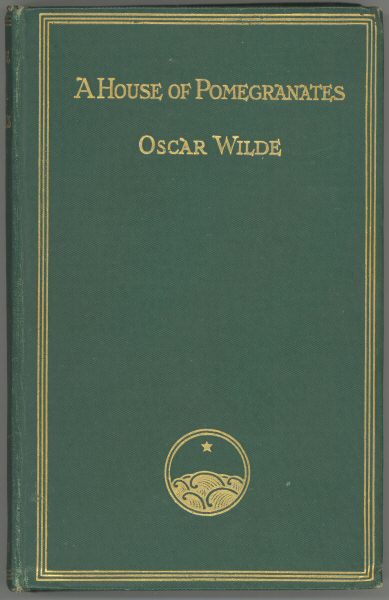
TO
CONSTANCE MARY WILDE
A HOUSE
OF POMEGRANATES
BY
OSCAR WILDE
METHUEN & CO. LTD.
36 ESSEX STREET W.C.
LONDON
SeventhEdition
First Published | 1891 |
First Issued by Methuen and Co.(LimitedEditions on Handmade Paper and Japanese Vellum) | 1908 |
Third Edition(F’cap.8vo) | 1909 |
Fourth Edition( ,, ) | 1911 |
Fifth Edition( ,, ) | 1913 |
Sixth Edition(Crown4to,Illustrated by Jessie King) | 1915 |
Seventh Edition(F’cap.8vo) | 1915 |
CONTENTS
| PAGE |
The Young King | 1 |
The Birthday of the Infanta | 31 |
The Fisherman and his Soul | 73 |
The Star-child | 147 |
p. 1THEYOUNG KING
TO
MARGARET LADY BROOKE
[THE RANEE OF SARAWAK]
It was the night before the dayfixed for his coronation, and the young King was sitting alone inhis beautiful chamber. His courtiers had all taken theirleave of him, bowing their heads to the ground, according to theceremonious usage of the day, and had retired to the Great Hallof the Palace, to receive a few last lessons from the Professorof Etiquette; there being some of them who had still quitenatural manners, which in a courtier is, I need hardly say, avery grave offence.
The lad—for he was only a lad, being but sixteen yearsof age—was not sorry at their departure, and had flunghimself back with a deep sigh of relief on the soft cushions ofhis embroidered couch, lying there, wild-eyed and open-mouthed,like a brown woodland Faun, or some young animal of the forestnewly snared by the hunters.
And, indeed, it was the hunters who had found him, coming uponhim almost by chance as, bare-limbed and pipe in hand, he wasfollowing the flock of the poor goatherd who had brought him up,and whose son he had always fancied himself to be. Thechild of the old King’s only daughter by a secret marriagewith one much beneath her in station—a stranger, some said,who, by the wonderful magic of his lute-playing, had made theyoung Princess love him; while others spoke of an artist fromRimini, to whom the Princess had shown much, perhaps too muchhonour, and who had suddenly disappeared from the city, leavinghis work in the Cathedral unfinished—he had been, when buta week old, stolen away from his mother’s side, as sheslept, and given into the charge of a common peasant and hiswife, who were without children of their own, and lived in aremote part of the forest, more than a day’s ride from thetown. Grief, or the plague, as the court physician stated,or, as some suggested, a swift Italian poison administered in acup of spiced wine, slew, within an hour of her wakening, thewhite girl who had given him birth, and as the trusty messengerwho bare the child across his saddle-bow stooped from his wearyhorse and knocked at the rude door of the goatherd’s hut,the body of the Princess was being lowered into an open gravethat had been dug in a deserted churchyard, beyond the citygates, a grave where it was said that another body was alsolying, that of a young man of marvellous and foreign beauty,whose hands were tied behind him with a knotted cord, and whosebreast was stabbed with many red wounds.
Such, at least, was the story that men whispered to eachother. Certain it was that the old King, when on hisdeathbed, whether moved by remorse for his great sin, or merelydesiring that the kingdom should not pass away from his line, hadhad the lad sent for, and, in the presence of the Council, hadacknowledged him as his heir.
And it seems that from the very first moment of hisrecognition he had shown signs of that strange passion for beautythat was destined to have so great an influence over hislife. Those who accompanied him to the suite of rooms setapart for his service, often spoke of the cry of pleasure thatbroke from his lips when he saw the delicate raiment and richjewels that had been prepared for him, and of the almost fiercejoy with which he flung aside his rough leathern tunic and coarsesheepskin cloak. He missed, indeed, at times the finefreedom of his forest life, and was always apt to chafe at thetedious Court ceremonies that occupied so much of each day, butthe wonderful palace—Joyeuse, as they calledit—of which he now found himself lord, seemed to him to bea new world fresh-fashioned for his delight; and as soon as hecould escape from the council-board or audience-chamber, he wouldrun down the great staircase, with its lions of gilt bronze andits steps of bright porphyry, and wander from room to room, andfrom corridor to corridor, like one who was seeking to find inbeauty an anodyne from pain, a sort of restoration fromsickness.
Upon these journeys of discovery, as he would callthem—and, indeed, they were to him real voyages through amarvellous land, he would sometimes be accompanied by the slim,fair-haired Court pages, with their floating mantles, and gayfluttering ribands; but more often he would be alone, feelingthrough a certain quick instinct, which was almost a divination,that the secrets of art are best learned in secret, and thatBeauty, like Wisdom, loves the lonely worshipper.
Many curious stories were related about him at thisperiod. It was said that a stout Burgo-master, who had cometo deliver a florid oratorical address on behalf of the citizensof the town, had caught sight of him kneeling in real adorationbefore a great picture that had just been brought from Venice,and that seemed to herald the worship of some new gods. Onanother occasion he had been missed for several hours, and aftera lengthened search had been discovered in a little chamber inone of the northern turrets of the palace gazing, as one in atrance, at a Greek gem carved with the figure of Adonis. Hehad been seen, so the tale ran, pressing his warm lips to themarble brow of an antique statue that had been discovered in thebed of the river on the occasion of the building of the stonebridge, and was inscribed with the name of the Bithynian slave ofHadrian. He had passed a whole night in noting the effectof the moonlight on a silver image of Endymion.
All rare and costly materials had certainly a greatfascination for him, and in his eagerness to procure them he hadsent away many merchants, some to traffic for amber with therough fisher-folk of the north seas, some to Egypt to look forthat curious green turquoise which is found only in the tombs ofkings, and is said to possess magical properties, some to Persiafor silken carpets and painted pottery, and others to India tobuy gauze and stained ivory, moonstones and bracelets of jade,sandal-wood and blue enamel and shawls of fine wool.
But what had occupied him most was the robe he was to wear athis coronation, the robe of tissued gold, and the ruby-studdedcrown, and the sceptre with its rows and rings of pearls. Indeed, it was of this that he was thinking to-night, as he layback on his luxurious couch, watching the great pinewood log thatwas burning itself out on the open hearth. The designs,which were from the hands of the most famous artists of the time,had been submitted to him many months before, and he had givenorders that the artificers were to toil night and day to carrythem out, and that the whole world was to be searched for jewelsthat would be worthy of their work. He saw himself in fancystanding at the high altar of the cathedral in the fair raimentof a King, and a smile played and lingered about his boyish lips,and lit up with a bright lustre his dark woodland eyes.
After some time he rose from his seat, and leaning against thecarved penthouse of the chimney, looked round at the dimly-litroom. The walls were hung with rich tapestries representingthe Triumph of Beauty. A large press, inlaid with agate andlapis-lazuli, filled one corner, and facing the window stood acuriously wrought cabinet with lacquer panels of powdered andmosaiced gold, on which were placed some delicate goblets ofVenetian glass, and a cup of dark-veined onyx. Pale poppieswere broidered on the silk coverlet of the bed, as though theyhad fallen from the tired hands of sleep, and tall reeds offluted ivory bare up the velvet canopy, from which great tufts ofostrich plumes sprang, like white foam, to the pallid silver ofthe fretted ceiling. A laughing Narcissus in green bronzeheld a polished mirror above its head. On the table stood aflat bowl of amethyst.
Outside he could see the huge dome of the cathedral, loominglike a bubble over the shadowy houses, and the weary sentinelspacing up and down on the misty terrace by the river. Faraway, in an orchard, a nightingale was singing. A faintperfume of jasmine came through the open window. He brushedhis brown curls back from his forehead, and taking up a lute, lethis fingers stray across the cords. His heavy eyelidsdrooped, and a strange languor came over him. Never beforehad he felt so keenly, or with such exquisite joy, the magic andthe mystery of beautiful things.
When midnight sounded from the clock-tower he touched a bell,and his pages entered and disrobed him with much ceremony,pouring rose-water over his hands, and strewing flowers on hispillow. A few moments after that they had left the room, hefell asleep.
And as he slept he dreamed a dream, and this was hisdream.
He thought that he was standing in a long, low attic, amidstthe whir and clatter of many looms. The meagre daylightpeered in through the grated windows, and showed him the gauntfigures of the weavers bending over their cases. Pale,sickly-looking children were crouched on the hugecrossbeams. As the shuttles dashed through the warp theylifted up the heavy battens, and when the shuttles stopped theylet the battens fall and pressed the threads together. Their faces were pinched with famine, and their thin hands shookand trembled. Some haggard women were seated at a tablesewing. A horrible odour filled the place. The airwas foul and heavy, and the walls dripped and streamed withdamp.
The young King went over to one of the weavers, and stood byhim and watched him.
And the weaver looked at him angrily, and said, ‘Why artthou watching me? Art thou a spy set on us by ourmaster?’
‘Who is thy master?’ asked the young King.
‘Our master!’ cried the weaver, bitterly. ‘He is a man like myself. Indeed, there is but thisdifference between us—that he wears fine clothes while I goin rags, and that while I am weak from hunger he suffers not alittle from overfeeding.’
‘The land is free,’ said the young King,‘and thou art no man’s slave.’
‘In war,’ answered the weaver, ‘the strongmake slaves of the weak, and in peace the rich make slaves of thepoor. We must work to live, and they give us such meanwages that we die. We toil for them all day long, and theyheap up gold in their coffers, and our children fade away beforetheir time, and the faces of those we love become hard andevil. We tread out the grapes, and another drinks thewine. We sow the corn, and our own board is empty. Wehave chains, though no eye beholds them; and are slaves, thoughmen call us free.’
‘Is it so with all?’ he asked,
‘It is so with all,’ answered the weaver,‘with the young as well as with the old, with the women aswell as with the men, with the little children as well as withthose who are stricken in years. The merchants grind usdown, and we must needs do their bidding. The priest ridesby and tells his beads, and no man has care of us. Throughour sunless lanes creeps Poverty with her hungry eyes, and Sinwith his sodden face follows close behind her. Misery wakesus in the morning, and Shame sits with us at night. Butwhat are these things to thee? Thou art not one ofus. Thy face is too happy.’ And he turned awayscowling, and threw the shuttle across the loom, and the youngKing saw that it was threaded with a thread of gold.
And a great terror seized upon him, and he said to the weaver,‘What robe is this that thou art weaving?’
‘It is the robe for the coronation of the youngKing,’ he answered; ‘what is that to thee?’
And the young King gave a loud cry and woke, and lo! he was inhis own chamber, and through the window he saw the greathoney-coloured moon hanging in the dusky air.
And he fell asleep again and dreamed, and this was hisdream.
He thought that he was lying on the deck of a huge galley thatwas being rowed by a hundred slaves. On a carpet by hisside the master of the galley was seated. He was black asebony, and his turban was of crimson silk. Great earringsof silver dragged down the thick lobes of his ears, and in hishands he had a pair of ivory scales.
The slaves were naked, but for a ragged loin-cloth, and eachman was chained to his neighbour. The hot sun beat brightlyupon them, and the negroes ran up and down the gangway and lashedthem with whips of hide. They stretched out their lean armsand pulled the heavy oars through the water. The salt sprayflew from the blades.
At last they reached a little bay, and began to takesoundings. A light wind blew from the shore, and coveredthe deck and the great lateen sail with a fine red dust. Three Arabs mounted on wild asses rode out and threw spears atthem. The master of the galley took a painted bow in hishand and shot one of them in the throat. He fell heavilyinto the surf, and his companions galloped away. A womanwrapped in a yellow veil followed slowly on a camel, looking backnow and then at the dead body.
As soon as they had cast anchor and hauled down the sail, thenegroes went into the hold and brought up a long rope-ladder,heavily weighted with lead. The master of the galley threwit over the side, making the ends fast to two ironstanchions. Then the negroes seized the youngest of theslaves and knocked his gyves off, and filled his nostrils and hisears with wax, and tied a big stone round his waist. Hecrept wearily down the ladder, and disappeared into thesea. A few bubbles rose where he sank. Some of theother slaves peered curiously over the side. At the prow ofthe galley sat a shark-charmer, beating monotonously upon adrum.
After some time the diver rose up out of the water, and clungpanting to the ladder with a pearl in his right hand. Thenegroes seized it from him, and thrust him back. The slavesfell asleep over their oars.
Again and again he came up, and each time that he did so hebrought with him a beautiful pearl. The master of thegalley weighed them, and put them into a little bag of greenleather.
The young King tried to speak, but his tongue seemed to cleaveto the roof of his mouth, and his lips refused to move. Thenegroes chattered to each other, and began to quarrel over astring of bright beads. Two cranes flew round and round thevessel.
Then the diver came up for the last time, and the pearl thathe brought with him was fairer than all the pearls of Ormuz, forit was shaped like the full moon, and whiter than the morningstar. But his face was strangely pale, and as he fell uponthe deck the blood gushed from his ears and nostrils. Hequivered for a little, and then he was still. The negroesshrugged their shoulders, and threw the body overboard.
And the master of the galley laughed, and, reaching out, hetook the pearl, and when he saw it he pressed it to his foreheadand bowed. ‘It shall be,’ he said, ‘forthe sceptre of the young King,’ and he made a sign to thenegroes to draw up the anchor.
And when the young King heard this he gave a great cry, andwoke, and through the window he saw the long grey fingers of thedawn clutching at the fading stars.
And he fell asleep again, and dreamed, and this was hisdream.
He thought that he was wandering through a dim wood, hung withstrange fruits and with beautiful poisonous flowers. Theadders hissed at him as he went by, and the bright parrots flewscreaming from branch to branch. Huge tortoises lay asleepupon the hot mud. The trees were full of apes andpeacocks.
On and on he went, till he reached the outskirts of the wood,and there he saw an immense multitude of men toiling in the bedof a dried-up river. They swarmed up the crag likeants. They dug deep pits in the ground and went down intothem. Some of them cleft the rocks with great axes; othersgrabbled in the sand.
They tore up the cactus by its roots, and trampled on thescarlet blossoms. They hurried about, calling to eachother, and no man was idle.
From the darkness of a cavern Death and Avarice watched them,and Death said, ‘I am weary; give me a third of them andlet me go.’ But Avarice shook her head. ‘They are my servants,’ she answered.
And Death said to her, ‘What hast thou in thyhand?’
‘I have three grains of corn,’ she answered;‘what is that to thee?’
‘Give me one of them,’ cried Death, ‘toplant in my garden; only one of them, and I will goaway.’
‘I will not give thee anything,’ said Avarice, andshe hid her hand in the fold of her raiment.
And Death laughed, and took a cup, and dipped it into a poolof water, and out of the cup rose Ague. She passed throughthe great multitude, and a third of them lay dead. A coldmist followed her, and the water-snakes ran by her side.
And when Avarice saw that a third of the multitude was deadshe beat her breast and wept. She beat her barren bosom,and cried aloud. ‘Thou hast slain a third of myservants,’ she cried, ‘get thee gone. There iswar in the mountains of Tartary, and the kings of each side arecalling to thee. The Afghans have slain the black ox, andare marching to battle. They have beaten upon their shieldswith their spears, and have put on their helmets of iron. What is my valley to thee, that thou shouldst tarry in it? Get thee gone, and come here no more.’
‘Nay,’ answered Death, ‘but till thou hastgiven me a grain of corn I will not go.’
But Avarice shut her hand, and clenched her teeth. ‘I will not give thee anything,’ she muttered.
And Death laughed, and took up a black stone, and threw itinto the forest, and out of a thicket of wild hemlock came Feverin a robe of flame. She passed through the multitude, andtouched them, and each man that she touched died. The grasswithered beneath her feet as she walked.
And Avarice shuddered, and put ashes on her head. ‘Thou art cruel,’ she cried; ‘thou artcruel. There is famine in the walled cities of India, andthe cisterns of Samarcand have run dry. There is famine inthe walled cities of Egypt, and the locusts have come up from thedesert. The Nile has not overflowed its banks, and thepriests have cursed Isis and Osiris. Get thee gone to thosewho need thee, and leave me my servants.’
‘Nay,’ answered Death, ‘but till thou hastgiven me a grain of corn I will not go.’
‘I will not give thee anything,’ said Avarice.
And Death laughed again, and he whistled through his fingers,and a woman came flying through the air. Plague was writtenupon her forehead, and a crowd of lean vultures wheeled roundher. She covered the valley with her wings, and no man wasleft alive.
And Avarice fled shrieking through the forest, and Deathleaped upon his red horse and galloped away, and his gallopingwas faster than the wind.
And out of the slime at the bottom of the valley crept dragonsand horrible things with scales, and the jackals came trottingalong the sand, sniffing up the air with their nostrils.
And the young King wept, and said: ‘Who were these men,and for what were they seeking?’
‘For rubies for a king’s crown,’ answeredone who stood behind him.
And the young King started, and, turning round, he saw a manhabited as a pilgrim and holding in his hand a mirror ofsilver.
And he grew pale, and said: ‘For what king?’
And the pilgrim answered: ‘Look in this mirror, and thoushalt see him.’
And he looked in the mirror, and, seeing his own face, he gavea great cry and woke, and the bright sunlight was streaming intothe room, and from the trees of the garden and pleasaunce thebirds were singing.
And the Chamberlain and the high officers of State came in andmade obeisance to him, and the pages brought him the robe oftissued gold, and set the crown and the sceptre before him.
And the young King looked at them, and they werebeautiful. More beautiful were they than aught that he hadever seen. But he remembered his dreams, and he said to hislords: ‘Take these things away, for I will not wearthem.’
And the courtiers were amazed, and some of them laughed, forthey thought that he was jesting.
But he spake sternly to them again, and said: ‘Takethese things away, and hide them from me. Though it be theday of my coronation, I will not wear them. For on the loomof Sorrow, and by the white hands of Pain, has this my robe beenwoven. There is Blood in the heart of the ruby, and Deathin the heart of the pearl.’ And he told them histhree dreams.
And when the courtiers heard them they looked at each otherand whispered, saying: ‘Surely he is mad; for what is adream but a dream, and a vision but a vision? They are notreal things that one should heed them. And what have we todo with the lives of those who toil for us? Shall a man noteat bread till he has seen the sower, nor drink wine till he hastalked with the vinedresser?’
And the Chamberlain spake to the young King, and said,‘My lord, I pray thee set aside these black thoughts ofthine, and put on this fair robe, and set this crown upon thyhead. For how shall the people know that thou art a king,if thou hast not a king’s raiment?’
And the young King looked at him. ‘Is it so,indeed?’ he questioned. ‘Will they not know mefor a king if I have not a king’s raiment?’
‘They will not know thee, my lord,’ cried theChamberlain.
‘I had thought that there had been men who werekinglike,’ he answered, ‘but it may be as thousayest. And yet I will not wear this robe, nor will I becrowned with this crown, but even as I came to the palace so willI go forth from it.’
And he bade them all leave him, save one page whom he kept ashis companion, a lad a year younger than himself. Him hekept for his service, and when he had bathed himself in clearwater, he opened a great painted chest, and from it he took theleathern tunic and rough sheepskin cloak that he had worn when hehad watched on the hillside the shaggy goats of thegoatherd. These he put on, and in his hand he took his rudeshepherd’s staff.
And the little page opened his big blue eyes in wonder, andsaid smiling to him, ‘My lord, I see thy robe and thysceptre, but where is thy crown?’
And the young King plucked a spray of wild briar that wasclimbing over the balcony, and bent it, and made a circlet of it,and set it on his own head.
‘This shall he my crown,’ he answered.
And thus attired he passed out of his chamber into the GreatHall, where the nobles were waiting for him.
And the nobles made merry, and some of them cried out to him,‘My lord, the people wait for their king, and thou showestthem a beggar,’ and others were wroth and said, ‘Hebrings shame upon our state, and is unworthy to be ourmaster.’ But he answered them not a word, but passedon, and went down the bright porphyry staircase, and out throughthe gates of bronze, and mounted upon his horse, and rode towardsthe cathedral, the little page running beside him.
And the people laughed and said, ‘It is the King’sfool who is riding by,’ and they mocked him.
And he drew rein and said, ‘Nay, but I am theKing.’ And he told them his three dreams.
And a man came out of the crowd and spake bitterly to him, andsaid, ‘Sir, knowest thou not that out of the luxury of therich cometh the life of the poor? By your pomp we arenurtured, and your vices give us bread. To toil for a hardmaster is bitter, but to have no master to toil for is morebitter still. Thinkest thou that the ravens will feedus? And what cure hast thou for these things? Wiltthou say to the buyer, “Thou shalt buy for so much,”and to the seller, “Thou shalt sell at thisprice”? I trow not. Therefore go back to thyPalace and put on thy purple and fine linen. What hast thouto do with us, and what we suffer?’
‘Are not the rich and the poor brothers?’ askedthe young King.
‘Ay,’ answered the man, ‘and the name of therich brother is Cain.’
And the young King’s eyes filled with tears, and he rodeon through the murmurs of the people, and the little page grewafraid and left him.
And when he reached the great portal of the cathedral, thesoldiers thrust their halberts out and said, ‘What dostthou seek here? None enters by this door but theKing.’
And his face flushed with anger, and he said to them, ‘Iam the King,’ and waved their halberts aside and passedin.
And when the old Bishop saw him coming in his goatherd’sdress, he rose up in wonder from his throne, and went to meethim, and said to him, ‘My son, is this a king’sapparel? And with what crown shall I crown thee, and whatsceptre shall I place in thy hand? Surely this should be tothee a day of joy, and not a day of abasement.’
‘Shall Joy wear what Grief has fashioned?’ saidthe young King. And he told him his three dreams.
And when the Bishop had heard them he knit his brows, andsaid, ‘My son, I am an old man, and in the winter of mydays, and I know that many evil things are done in the wideworld. The fierce robbers come down from the mountains, andcarry off the little children, and sell them to the Moors. The lions lie in wait for the caravans, and leap upon thecamels. The wild boar roots up the corn in the valley, andthe foxes gnaw the vines upon the hill. The pirates laywaste the sea-coast and burn the ships of the fishermen, and taketheir nets from them. In the salt-marshes live the lepers;they have houses of wattled reeds, and none may come nighthem. The beggars wander through the cities, and eat theirfood with the dogs. Canst thou make these things not tobe? Wilt thou take the leper for thy bedfellow, and set thebeggar at thy board? Shall the lion do thy bidding, and thewild boar obey thee? Is not He who made misery wiser thanthou art? Wherefore I praise thee not for this that thouhast done, but I bid thee ride back to the Palace and make thyface glad, and put on the raiment that beseemeth a king, and withthe crown of gold I will crown thee, and the sceptre of pearlwill I place in thy hand. And as for thy dreams, think nomore of them. The burden of this world is too great for oneman to bear, and the world’s sorrow too heavy for one heartto suffer.’
‘Sayest thou that in this house?’ said the youngKing, and he strode past the Bishop, and climbed up the steps ofthe altar, and stood before the image of Christ.
He stood before the image of Christ, and on his right hand andon his left were the marvellous vessels of gold, the chalice withthe yellow wine, and the vial with the holy oil. He kneltbefore the image of Christ, and the great candles burned brightlyby the jewelled shrine, and the smoke of the incense curled inthin blue wreaths through the dome. He bowed his head inprayer, and the priests in their stiff copes crept away from thealtar.
And suddenly a wild tumult came from the street outside, andin entered the nobles with drawn swords and nodding plumes, andshields of polished steel. ‘Where is this dreamer ofdreams?’ they cried. ‘Where is this King who isapparelled like a beggar—this boy who brings shame upon ourstate? Surely we will slay him, for he is unworthy to ruleover us.’
And the young King bowed his head again, and prayed, and whenhe had finished his prayer he rose up, and turning round helooked at them sadly.
And lo! through the painted windows came the sunlightstreaming upon him, and the sun-beams wove round him a tissuedrobe that was fairer than the robe that had been fashioned forhis pleasure. The dead staff blossomed, and bare liliesthat were whiter than pearls. The dry thorn blossomed, andbare roses that were redder than rubies. Whiter than finepearls were the lilies, and their stems were of brightsilver. Redder than male rubies were the roses, and theirleaves were of beaten gold.
He stood there in the raiment of a king, and the gates of thejewelled shrine flew open, and from the crystal of the many-rayedmonstrance shone a marvellous and mystical light. He stoodthere in a king’s raiment, and the Glory of God filled theplace, and the saints in their carven niches seemed tomove. In the fair raiment of a king he stood before them,and the organ pealed out its music, and the trumpeters blew upontheir trumpets, and the singing boys sang.
And the people fell upon their knees in awe, and the noblessheathed their swords and did homage, and the Bishop’s facegrew pale, and his hands trembled. ‘A greater than Ihath crowned thee,’ he cried, and he knelt before him.
And the young King came down from the high altar, and passedhome through the midst of the people. But no man dared lookupon his face, for it was like the face of an angel.
p. 31THEBIRTHDAY OF THE INFANTA
TO
MRS. WILLIAM H. GRENFELL
OF TAPLOW COURT
[LADY DESBOROUGH]
It was the birthday of theInfanta. She was just twelve years of age, and the sun wasshining brightly in the gardens of the palace.
Although she was a real Princess and the Infanta of Spain, shehad only one birthday every year, just like the children of quitepoor people, so it was naturally a matter of great importance tothe whole country that she should have a really fine day for theoccasion. And a really fine day it certainly was. Thetall striped tulips stood straight up upon their stalks, likelong rows of soldiers, and looked defiantly across the grass atthe roses, and said: ‘We are quite as splendid as you arenow.’ The purple butterflies fluttered about withgold dust on their wings, visiting each flower in turn; thelittle lizards crept out of the crevices of the wall, and laybasking in the white glare; and the pomegranates split andcracked with the heat, and showed their bleeding redhearts. Even the pale yellow lemons, that hung in suchprofusion from the mouldering trellis and along the dim arcades,seemed to have caught a richer colour from the wonderfulsunlight, and the magnolia trees opened their great globe-likeblossoms of folded ivory, and filled the air with a sweet heavyperfume.
The little Princess herself walked up and down the terracewith her companions, and played at hide and seek round the stonevases and the old moss-grown statues. On ordinary days shewas only allowed to play with children of her own rank, so shehad always to play alone, but her birthday was an exception, andthe King had given orders that she was to invite any of her youngfriends whom she liked to come and amuse themselves withher. There was a stately grace about these slim Spanishchildren as they glided about, the boys with their large-plumedhats and short fluttering cloaks, the girls holding up the trainsof their long brocaded gowns, and shielding the sun from theireyes with huge fans of black and silver. But the Infantawas the most graceful of all, and the most tastefully attired,after the somewhat cumbrous fashion of the day. Her robewas of grey satin, the skirt and the wide puffed sleeves heavilyembroidered with silver, and the stiff corset studded with rowsof fine pearls. Two tiny slippers with big pink rosettespeeped out beneath her dress as she walked. Pink and pearlwas her great gauze fan, and in her hair, which like an aureoleof faded gold stood out stiffly round her pale little face, shehad a beautiful white rose.
From a window in the palace the sad melancholy King watchedthem. Behind him stood his brother, Don Pedro of Aragon,whom he hated, and his confessor, the Grand Inquisitor ofGranada, sat by his side. Sadder even than usual was theKing, for as he looked at the Infanta bowing with childishgravity to the assembling counters, or laughing behind her fan atthe grim Duchess of Albuquerque who always accompanied her, hethought of the young Queen, her mother, who but a short timebefore—so it seemed to him—had come from the gaycountry of France, and had withered away in the sombre splendourof the Spanish court, dying just six months after the birth ofher child, and before she had seen the almonds blossom twice inthe orchard, or plucked the second year’s fruit from theold gnarled fig-tree that stood in the centre of the nowgrass-grown courtyard. So great had been his love for herthat he had not suffered even the grave to hide her fromhim. She had been embalmed by a Moorish physician, who inreturn for this service had been granted his life, which forheresy and suspicion of magical practices had been alreadyforfeited, men said, to the Holy Office, and her body was stilllying on its tapestried bier in the black marble chapel of thePalace, just as the monks had borne her in on that windy Marchday nearly twelve years before. Once every month the King,wrapped in a dark cloak and with a muffled lantern in his hand,went in and knelt by her side calling out, ‘Mireina! Mi reina!’ and sometimes breakingthrough the formal etiquette that in Spain governs every separateaction of life, and sets limits even to the sorrow of a King, hewould clutch at the pale jewelled hands in a wild agony of grief,and try to wake by his mad kisses the cold painted face.
To-day he seemed to see her again, as he had seen her first atthe Castle of Fontainebleau, when he was but fifteen years ofage, and she still younger. They had been formallybetrothed on that occasion by the Papal Nuncio in the presence ofthe French King and all the Court, and he had returned to theEscurial bearing with him a little ringlet of yellow hair, andthe memory of two childish lips bending down to kiss his hand ashe stepped into his carriage. Later on had followed themarriage, hastily performed at Burgos, a small town on thefrontier between the two countries, and the grand public entryinto Madrid with the customary celebration of high mass at theChurch of La Atocha, and a more than usually solemnauto-da-fé, in which nearly three hundred heretics,amongst whom were many Englishmen, had been delivered over to thesecular arm to be burned.
Certainly he had loved her madly, and to the ruin, manythought, of his country, then at war with England for thepossession of the empire of the New World. He had hardlyever permitted her to be out of his sight; for her, he hadforgotten, or seemed to have forgotten, all grave affairs ofState; and, with that terrible blindness that passion brings uponits servants, he had failed to notice that the elaborateceremonies by which he sought to please her did but aggravate thestrange malady from which she suffered. When she died hewas, for a time, like one bereft of reason. Indeed, thereis no doubt but that he would have formally abdicated and retiredto the great Trappist monastery at Granada, of which he wasalready titular Prior, had he not been afraid to leave the littleInfanta at the mercy of his brother, whose cruelty, even inSpain, was notorious, and who was suspected by many of havingcaused the Queen’s death by means of a pair of poisonedgloves that he had presented to her on the occasion of hervisiting his castle in Aragon. Even after the expiration ofthe three years of public mourning that he had ordainedthroughout his whole dominions by royal edict, he would neversuffer his ministers to speak about any new alliance, and whenthe Emperor himself sent to him, and offered him the hand of thelovely Archduchess of Bohemia, his niece, in marriage, he badethe ambassadors tell their master that the King of Spain wasalready wedded to Sorrow, and that though she was but a barrenbride he loved her better than Beauty; an answer that cost hiscrown the rich provinces of the Netherlands, which soon after, atthe Emperor’s instigation, revolted against him under theleadership of some fanatics of the Reformed Church.
His whole married life, with its fierce, fiery-coloured joysand the terrible agony of its sudden ending, seemed to come backto him to-day as he watched the Infanta playing on theterrace. She had all the Queen’s pretty petulance ofmanner, the same wilful way of tossing her head, the same proudcurved beautiful mouth, the same wonderful smile—vraisourire de Franceindeed—as she glanced up now and thenat the window, or stretched out her little hand for the statelySpanish gentlemen to kiss. But the shrill laughter of thechildren grated on his ears, and the bright pitiless sunlightmocked his sorrow, and a dull odour of strange spices, spicessuch as embalmers use, seemed to taint—or was itfancy?—the clear morning air. He buried his face inhis hands, and when the Infanta looked up again the curtains hadbeen drawn, and the King had retired.
She made a little moueof disappointment, and shruggedher shoulders. Surely he might have stayed with her on herbirthday. What did the stupid State-affairs matter? Or had he gone to that gloomy chapel, where the candles werealways burning, and where she was never allowed to enter? How silly of him, when the sun was shining so brightly, andeverybody was so happy! Besides, he would miss the shambull-fight for which the trumpet was already sounding, to saynothing of the puppet-show and the other wonderful things. Her uncle and the Grand Inquisitor were much more sensible. They had come out on the terrace, and paid her nicecompliments. So she tossed her pretty head, and taking DonPedro by the hand, she walked slowly down the steps towards along pavilion of purple silk that had been erected at the end ofthe garden, the other children following in strict order ofprecedence, those who had the longest names going first.
A procession of noble boys, fantastically dressed astoreadors, came out to meet her, and the young Count ofTierra-Nueva, a wonderfully handsome lad of about fourteen yearsof age, uncovering his head with all the grace of a born hidalgoand grandee of Spain, led her solemnly in to a little gilt andivory chair that was placed on a raised dais above thearena. The children grouped themselves all round,fluttering their big fans and whispering to each other, and DonPedro and the Grand Inquisitor stood laughing at theentrance. Even the Duchess—the Camerera-Mayor as shewas called—a thin, hard-featured woman with a yellow ruff,did not look quite so bad-tempered as usual, and something like achill smile flitted across her wrinkled face and twitched herthin bloodless lips.
It certainly was a marvellous bull-fight, and much nicer, theInfanta thought, than the real bull-fight that she had beenbrought to see at Seville, on the occasion of the visit of theDuke of Parma to her father. Some of the boys pranced abouton richly-caparisoned hobby-horses brandishing long javelins withgay streamers of bright ribands attached to them; others went onfoot waving their scarlet cloaks before the bull, and vaultinglightly over the barrier when he charged them; and as for thebull himself, he was just like a live bull, though he was onlymade of wicker-work and stretched hide, and sometimes insisted onrunning round the arena on his hind legs, which no live bull everdreams of doing. He made a splendid fight of it too, andthe children got so excited that they stood up upon the benches,and waved their lace handkerchiefs and cried out: Bravotoro! Bravo toro! just as sensibly as if theyhad been grown-up people. At last, however, after aprolonged combat, during which several of the hobby-horses weregored through and through, and, their riders dismounted, theyoung Count of Tierra-Nueva brought the bull to his knees, andhaving obtained permission from the Infanta to give the coupde grâce, he plunged his wooden sword into the neck ofthe animal with such violence that the head came right off, anddisclosed the laughing face of little Monsieur de Lorraine, theson of the French Ambassador at Madrid.
The arena was then cleared amidst much applause, and the deadhobby-horses dragged solemnly away by two Moorish pages in yellowand black liveries, and after a short interlude, during which aFrench posture-master performed upon the tightrope, some Italianpuppets appeared in the semi-classical tragedy ofSophonisbaon the stage of a small theatre that had beenbuilt up for the purpose. They acted so well, and theirgestures were so extremely natural, that at the close of the playthe eyes of the Infanta were quite dim with tears. Indeedsome of the children really cried, and had to be comforted withsweetmeats, and the Grand Inquisitor himself was so affected thathe could not help saying to Don Pedro that it seemed to himintolerable that things made simply out of wood and coloured wax,and worked mechanically by wires, should be so unhappy and meetwith such terrible misfortunes.
An African juggler followed, who brought in a large flatbasket covered with a red cloth, and having placed it in thecentre of the arena, he took from his turban a curious reed pipe,and blew through it. In a few moments the cloth began tomove, and as the pipe grew shriller and shriller two green andgold snakes put out their strange wedge-shaped heads and roseslowly up, swaying to and fro with the music as a plant sways inthe water. The children, however, were rather frightened attheir spotted hoods and quick darting tongues, and were much morepleased when the juggler made a tiny orange-tree grow out of thesand and bear pretty white blossoms and clusters of real fruit;and when he took the fan of the little daughter of the Marquessde Las-Torres, and changed it into a blue bird that flew allround the pavilion and sang, their delight and amazement knew nobounds. The solemn minuet, too, performed by the dancingboys from the church of Nuestra Senora Del Pilar, wascharming. The Infanta had never before seen this wonderfulceremony which takes place every year at Maytime in front of thehigh altar of the Virgin, and in her honour; and indeed none ofthe royal family of Spain had entered the great cathedral ofSaragossa since a mad priest, supposed by many to have been inthe pay of Elizabeth of England, had tried to administer apoisoned wafer to the Prince of the Asturias. So she hadknown only by hearsay of ‘Our Lady’s Dance,’ asit was called, and it certainly was a beautiful sight. Theboys wore old-fashioned court dresses of white velvet, and theircurious three-cornered hats were fringed with silver andsurmounted with huge plumes of ostrich feathers, the dazzlingwhiteness of their costumes, as they moved about in the sunlight,being still more accentuated by their swarthy faces and longblack hair. Everybody was fascinated by the grave dignitywith which they moved through the intricate figures of the dance,and by the elaborate grace of their slow gestures, and statelybows, and when they had finished their performance and doffedtheir great plumed hats to the Infanta, she acknowledged theirreverence with much courtesy, and made a vow that she would senda large wax candle to the shrine of Our Lady of Pilar in returnfor the pleasure that she had given her.
A troop of handsome Egyptians—as the gipsies were termedin those days—then advanced into the arena, and sittingdown cross-legs, in a circle, began to play softly upon theirzithers, moving their bodies to the tune, and humming, almostbelow their breath, a low dreamy air. When they caughtsight of Don Pedro they scowled at him, and some of them lookedterrified, for only a few weeks before he had had two of theirtribe hanged for sorcery in the market-place at Seville, but thepretty Infanta charmed them as she leaned back peeping over herfan with her great blue eyes, and they felt sure that one solovely as she was could never be cruel to anybody. So theyplayed on very gently and just touching the cords of the zitherswith their long pointed nails, and their heads began to nod asthough they were falling asleep. Suddenly, with a cry soshrill that all the children were startled and Don Pedro’shand clutched at the agate pommel of his dagger, they leapt totheir feet and whirled madly round the enclosure beating theirtambourines, and chaunting some wild love-song in their strangeguttural language. Then at another signal they all flungthemselves again to the ground and lay there quite still, thedull strumming of the zithers being the only sound that broke thesilence. After that they had done this several times, theydisappeared for a moment and came back leading a brown shaggybear by a chain, and carrying on their shoulders some littleBarbary apes. The bear stood upon his head with the utmostgravity, and the wizened apes played all kinds of amusing trickswith two gipsy boys who seemed to be their masters, and foughtwith tiny swords, and fired off guns, and went through a regularsoldier’s drill just like the King’s ownbodyguard. In fact the gipsies were a great success.
But the funniest part of the whole morning’sentertainment, was undoubtedly the dancing of the littleDwarf. When he stumbled into the arena, waddling on hiscrooked legs and wagging his huge misshapen head from side toside, the children went off into a loud shout of delight, and theInfanta herself laughed so much that the Camerera was obliged toremind her that although there were many precedents in Spain fora King’s daughter weeping before her equals, there werenone for a Princess of the blood royal making so merry beforethose who were her inferiors in birth. The Dwarf, however,was really quite irresistible, and even at the Spanish Court,always noted for its cultivated passion for the horrible, sofantastic a little monster had never been seen. It was hisfirst appearance, too. He had been discovered only the daybefore, running wild through the forest, by two of the nobles whohappened to have been hunting in a remote part of the greatcork-wood that surrounded the town, and had been carried off bythem to the Palace as a surprise for the Infanta; his father, whowas a poor charcoal-burner, being but too well pleased to get ridof so ugly and useless a child. Perhaps the most amusingthing about him was his complete unconsciousness of his owngrotesque appearance. Indeed he seemed quite happy and fullof the highest spirits. When the children laughed, helaughed as freely and as joyously as any of them, and at theclose of each dance he made them each the funniest of bows,smiling and nodding at them just as if he was really one ofthemselves, and not a little misshapen thing that Nature, in somehumourous mood, had fashioned for others to mock at. As forthe Infanta, she absolutely fascinated him. He could notkeep his eyes off her, and seemed to dance for her alone, andwhen at the close of the performance, remembering how she hadseen the great ladies of the Court throw bouquets to Caffarelli,the famous Italian treble, whom the Pope had sent from his ownchapel to Madrid that he might cure the King’s melancholyby the sweetness of his voice, she took out of her hair thebeautiful white rose, and partly for a jest and partly to teasethe Camerera, threw it to him across the arena with her sweetestsmile, he took the whole matter quite seriously, and pressing theflower to his rough coarse lips he put his hand upon his heart,and sank on one knee before her, grinning from ear to ear, andwith his little bright eyes sparkling with pleasure.
This so upset the gravity of the Infanta that she kept onlaughing long after the little Dwarf had ran out of the arena,and expressed a desire to her uncle that the dance should beimmediately repeated. The Camerera, however, on the pleathat the sun was too hot, decided that it would be better thather Highness should return without delay to the Palace, where awonderful feast had been already prepared for her, including areal birthday cake with her own initials worked all over it inpainted sugar and a lovely silver flag waving from the top. The Infanta accordingly rose up with much dignity, and havinggiven orders that the little dwarf was to dance again for herafter the hour of siesta, and conveyed her thanks to the youngCount of Tierra-Nueva for his charming reception, she went backto her apartments, the children following in the same order inwhich they had entered.
Now when the little Dwarf heard that he was to dance a secondtime before the Infanta, and by her own express command, he wasso proud that he ran out into the garden, kissing the white rosein an absurd ecstasy of pleasure, and making the most uncouth andclumsy gestures of delight.
The Flowers were quite indignant at his daring to intrude intotheir beautiful home, and when they saw him capering up and downthe walks, and waving his arms above his head in such aridiculous manner, they could not restrain their feelings anylonger.
‘He is really far too ugly to be allowed to play in anyplace where we are,’ cried the Tulips.
‘He should drink poppy-juice, and go to sleep for athousand years,’ said the great scarlet Lilies, and theygrew quite hot and angry.
‘He is a perfect horror!’ screamed theCactus. ‘Why, he is twisted and stumpy, and his headis completely out of proportion with his legs. Really hemakes me feel prickly all over, and if he comes near me I willsting him with my thorns.’
‘And he has actually got one of my best blooms,’exclaimed the White Rose-Tree. ‘I gave it to theInfanta this morning myself, as a birthday present, and he hasstolen it from her.’ And she called out:‘Thief, thief, thief!’ at the top of her voice.
Even the red Geraniums, who did not usually give themselvesairs, and were known to have a great many poor relationsthemselves, curled up in disgust when they saw him, and when theViolets meekly remarked that though he was certainly extremelyplain, still he could not help it, they retorted with a good dealof justice that that was his chief defect, and that there was noreason why one should admire a person because he was incurable;and, indeed, some of the Violets themselves felt that theugliness of the little Dwarf was almost ostentatious, and that hewould have shown much better taste if he had looked sad, or atleast pensive, instead of jumping about merrily, and throwinghimself into such grotesque and silly attitudes.
As for the old Sundial, who was an extremely remarkableindividual, and had once told the time of day to no less a personthan the Emperor Charles V. himself, he was so taken aback by thelittle Dwarf’s appearance, that he almost forgot to marktwo whole minutes with his long shadowy finger, and could nothelp saying to the great milk-white Peacock, who was sunningherself on the balustrade, that every one knew that the childrenof Kings were Kings, and that the children of charcoal-burnerswere charcoal-burners, and that it was absurd to pretend that itwasn’t so; a statement with which the Peacock entirelyagreed, and indeed screamed out, ‘Certainly,certainly,’ in such a loud, harsh voice, that the gold-fishwho lived in the basin of the cool splashing fountain put theirheads out of the water, and asked the huge stone Tritons what onearth was the matter.
But somehow the Birds liked him. They had seen him oftenin the forest, dancing about like an elf after the eddyingleaves, or crouched up in the hollow of some old oak-tree,sharing his nuts with the squirrels. They did not mind hisbeing ugly, a bit. Why, even the nightingale herself, whosang so sweetly in the orange groves at night that sometimes theMoon leaned down to listen, was not much to look at after all;and, besides, he had been kind to them, and during that terriblybitter winter, when there were no berries on the trees, and theground was as hard as iron, and the wolves had come down to thevery gates of the city to look for food, he had never onceforgotten them, but had always given them crumbs out of hislittle hunch of black bread, and divided with them whatever poorbreakfast he had.
So they flew round and round him, just touching his cheek withtheir wings as they passed, and chattered to each other, and thelittle Dwarf was so pleased that he could not help showing themthe beautiful white rose, and telling them that the Infantaherself had given it to him because she loved him.
They did not understand a single word of what he was saying,but that made no matter, for they put their heads on one side,and looked wise, which is quite as good as understanding a thing,and very much easier.
The Lizards also took an immense fancy to him, and when hegrew tired of running about and flung himself down on the grassto rest, they played and romped all over him, and tried to amusehim in the best way they could. ‘Every one cannot beas beautiful as a lizard,’ they cried; ‘that would betoo much to expect. And, though it sounds absurd to say so,he is really not so ugly after all, provided, of course, that oneshuts one’s eyes, and does not look at him.’ The Lizards were extremely philosophical by nature, and often satthinking for hours and hours together, when there was nothingelse to do, or when the weather was too rainy for them to goout.
The Flowers, however, were excessively annoyed at theirbehaviour, and at the behaviour of the birds. ‘Itonly shows,’ they said, ‘what a vulgarising effectthis incessant rushing and flying about has. Well-bredpeople always stay exactly in the same place, as we do. Noone ever saw us hopping up and down the walks, or galloping madlythrough the grass after dragon-flies. When we do wantchange of air, we send for the gardener, and he carries us toanother bed. This is dignified, and as it should be. But birds and lizards have no sense of repose, and indeed birdshave not even a permanent address. They are mere vagrantslike the gipsies, and should be treated in exactly the samemanner.’ So they put their noses in the air, andlooked very haughty, and were quite delighted when after sometime they saw the little Dwarf scramble up from the grass, andmake his way across the terrace to the palace.
‘He should certainly be kept indoors for the rest of hisnatural life,’ they said. ‘Look at his hunchedback, and his crooked legs,’ and they began to titter.
But the little Dwarf knew nothing of all this. He likedthe birds and the lizards immensely, and thought that the flowerswere the most marvellous things in the whole world, except ofcourse the Infanta, but then she had given him the beautifulwhite rose, and she loved him, and that made a greatdifference. How he wished that he had gone back withher! She would have put him on her right hand, and smiledat him, and he would have never left her side, but would havemade her his playmate, and taught her all kinds of delightfultricks. For though he had never been in a palace before, heknew a great many wonderful things. He could make littlecages out of rushes for the grasshoppers to sing in, and fashionthe long jointed bamboo into the pipe that Pan loves tohear. He knew the cry of every bird, and could call thestarlings from the tree-top, or the heron from the mere. Heknew the trail of every animal, and could track the hare by itsdelicate footprints, and the boar by the trampled leaves. All the wild-dances he knew, the mad dance in red raiment withthe autumn, the light dance in blue sandals over the corn, thedance with white snow-wreaths in winter, and the blossom-dancethrough the orchards in spring. He knew where thewood-pigeons built their nests, and once when a fowler had snaredthe parent birds, he had brought up the young ones himself, andhad built a little dovecot for them in the cleft of a pollardelm. They were quite tame, and used to feed out of hishands every morning. She would like them, and the rabbitsthat scurried about in the long fern, and the jays with theirsteely feathers and black bills, and the hedgehogs that couldcurl themselves up into prickly balls, and the great wisetortoises that crawled slowly about, shaking their heads andnibbling at the young leaves. Yes, she must certainly cometo the forest and play with him. He would give her his ownlittle bed, and would watch outside the window till dawn, to seethat the wild horned cattle did not harm her, nor the gauntwolves creep too near the hut. And at dawn he would tap atthe shutters and wake her, and they would go out and dancetogether all the day long. It was really not a bit lonelyin the forest. Sometimes a Bishop rode through on his whitemule, reading out of a painted book. Sometimes in theirgreen velvet caps, and their jerkins of tanned deerskin, thefalconers passed by, with hooded hawks on their wrists. Atvintage-time came the grape-treaders, with purple hands and feet,wreathed with glossy ivy and carrying dripping skins of wine; andthe charcoal-burners sat round their huge braziers at night,watching the dry logs charring slowly in the fire, and roastingchestnuts in the ashes, and the robbers came out of their cavesand made merry with them. Once, too, he had seen abeautiful procession winding up the long dusty road toToledo. The monks went in front singing sweetly, andcarrying bright banners and crosses of gold, and then, in silverarmour, with matchlocks and pikes, came the soldiers, and intheir midst walked three barefooted men, in strange yellowdresses painted all over with wonderful figures, and carryinglighted candles in their hands. Certainly there was a greatdeal to look at in the forest, and when she was tired he wouldfind a soft bank of moss for her, or carry her in his arms, forhe was very strong, though he knew that he was not tall. Hewould make her a necklace of red bryony berries, that would bequite as pretty as the white berries that she wore on her dress,and when she was tired of them, she could throw them away, and hewould find her others. He would bring her acorn-cups anddew-drenched anemones, and tiny glow-worms to be stars in thepale gold of her hair.
But where was she? He asked the white rose, and it madehim no answer. The whole palace seemed asleep, and evenwhere the shutters had not been closed, heavy curtains had beendrawn across the windows to keep out the glare. He wanderedall round looking for some place through which he might gain anentrance, and at last he caught sight of a little private doorthat was lying open. He slipped through, and found himselfin a splendid hall, far more splendid, he feared, than theforest, there was so much more gilding everywhere, and even thefloor was made of great coloured stones, fitted together into asort of geometrical pattern. But the little Infanta was notthere, only some wonderful white statues that looked down on himfrom their jasper pedestals, with sad blank eyes and strangelysmiling lips.
At the end of the hall hung a richly embroidered curtain ofblack velvet, powdered with suns and stars, the King’sfavourite devices, and broidered on the colour he lovedbest. Perhaps she was hiding behind that? He wouldtry at any rate.
So he stole quietly across, and drew it aside. No; therewas only another room, though a prettier room, he thought, thanthe one he had just left. The walls were hung with amany-figured green arras of needle-wrought tapestry representinga hunt, the work of some Flemish artists who had spent more thanseven years in its composition. It had once been thechamber of Jean le Fou, as he was called, that mad Kingwho was so enamoured of the chase, that he had often tried in hisdelirium to mount the huge rearing horses, and to drag down thestag on which the great hounds were leaping, sounding his huntinghorn, and stabbing with his dagger at the pale flying deer. It was now used as the council-room, and on the centre table werelying the red portfolios of the ministers, stamped with the goldtulips of Spain, and with the arms and emblems of the house ofHapsburg.
The little Dwarf looked in wonder all round him, and washalf-afraid to go on. The strange silent horsemen thatgalloped so swiftly through the long glades without making anynoise, seemed to him like those terrible phantoms of whom he hadheard the charcoal-burners speaking—the Comprachos, whohunt only at night, and if they meet a man, turn him into a hind,and chase him. But he thought of the pretty Infanta, andtook courage. He wanted to find her alone, and to tell herthat he too loved her. Perhaps she was in the roombeyond.
He ran across the soft Moorish carpets, and opened thedoor. No! She was not here either. The room wasquite empty.
It was a throne-room, used for the reception of foreignambassadors, when the King, which of late had not been often,consented to give them a personal audience; the same room inwhich, many years before, envoys had appeared from England tomake arrangements for the marriage of their Queen, then one ofthe Catholic sovereigns of Europe, with the Emperor’seldest son. The hangings were of gilt Cordovan leather, anda heavy gilt chandelier with branches for three hundred waxlights hung down from the black and white ceiling. Underneath a great canopy of gold cloth, on which the lions andtowers of Castile were broidered in seed pearls, stood the throneitself, covered with a rich pall of black velvet studded withsilver tulips and elaborately fringed with silver andpearls. On the second step of the throne was placed thekneeling-stool of the Infanta, with its cushion of cloth ofsilver tissue, and below that again, and beyond the limit of thecanopy, stood the chair for the Papal Nuncio, who alone had theright to be seated in the King’s presence on the occasionof any public ceremonial, and whose Cardinal’s hat, withits tangled scarlet tassels, lay on a purple tabouretinfront. On the wall, facing the throne, hung a life-sizedportrait of Charles V. in hunting dress, with a great mastiff byhis side, and a picture of Philip II. receiving the homage of theNetherlands occupied the centre of the other wall. Betweenthe windows stood a black ebony cabinet, inlaid with plates ofivory, on which the figures from Holbein’s Dance of Deathhad been graved—by the hand, some said, of that famousmaster himself.
But the little Dwarf cared nothing for all thismagnificence. He would not have given his rose for all thepearls on the canopy, nor one white petal of his rose for thethrone itself. What he wanted was to see the Infanta beforeshe went down to the pavilion, and to ask her to come away withhim when he had finished his dance. Here, in the Palace,the air was close and heavy, but in the forest the wind blewfree, and the sunlight with wandering hands of gold moved thetremulous leaves aside. There were flowers, too, in theforest, not so splendid, perhaps, as the flowers in the garden,but more sweetly scented for all that; hyacinths in early springthat flooded with waving purple the cool glens, and grassyknolls; yellow primroses that nestled in little clumps round thegnarled roots of the oak-trees; bright celandine, and bluespeedwell, and irises lilac and gold. There were greycatkins on the hazels, and the foxgloves drooped with the weightof their dappled bee-haunted cells. The chestnut had itsspires of white stars, and the hawthorn its pallid moons ofbeauty. Yes: surely she would come if he could only findher! She would come with him to the fair forest, and allday long he would dance for her delight. A smile lit up hiseyes at the thought, and he passed into the next room.
Of all the rooms this was the brightest and the mostbeautiful. The walls were covered with a pink-floweredLucca damask, patterned with birds and dotted with daintyblossoms of silver; the furniture was of massive silver,festooned with florid wreaths, and swinging Cupids; in front ofthe two large fire-places stood great screens broidered withparrots and peacocks, and the floor, which was of sea-green onyx,seemed to stretch far away into the distance. Nor was healone. Standing under the shadow of the doorway, at theextreme end of the room, he saw a little figure watchinghim. His heart trembled, a cry of joy broke from his lips,and he moved out into the sunlight. As he did so, thefigure moved out also, and he saw it plainly.
The Infanta! It was a monster, the most grotesquemonster he had ever beheld. Not properly shaped, as allother people were, but hunchbacked, and crooked-limbed, with hugelolling head and mane of black hair. The little Dwarffrowned, and the monster frowned also. He laughed, and itlaughed with him, and held its hands to its sides, just as hehimself was doing. He made it a mocking bow, and itreturned him a low reverence. He went towards it, and itcame to meet him, copying each step that he made, and stoppingwhen he stopped himself. He shouted with amusement, and ranforward, and reached out his hand, and the hand of the monstertouched his, and it was as cold as ice. He grew afraid, andmoved his hand across, and the monster’s hand followed itquickly. He tried to press on, but something smooth andhard stopped him. The face of the monster was now close tohis own, and seemed full of terror. He brushed his hair offhis eyes. It imitated him. He struck at it, and itreturned blow for blow. He loathed it, and it made hideousfaces at him. He drew back, and it retreated.
What is it? He thought for a moment, and looked round atthe rest of the room. It was strange, but everything seemedto have its double in this invisible wall of clear water. Yes, picture for picture was repeated, and couch for couch. The sleeping Faun that lay in the alcove by the doorway had itstwin brother that slumbered, and the silver Venus that stood inthe sunlight held out her arms to a Venus as lovely asherself.
Was it Echo? He had called to her once in the valley,and she had answered him word for word. Could she mock theeye, as she mocked the voice? Could she make a mimic worldjust like the real world? Could the shadows of things havecolour and life and movement? Could it be that—?
He started, and taking from his breast the beautiful whiterose, he turned round, and kissed it. The monster had arose of its own, petal for petal the same! It kissed itwith like kisses, and pressed it to its heart with horriblegestures.
When the truth dawned upon him, he gave a wild cry of despair,and fell sobbing to the ground. So it was he who wasmisshapen and hunchbacked, foul to look at and grotesque. He himself was the monster, and it was at him that all thechildren had been laughing, and the little Princess who he hadthought loved him—she too had been merely mocking at hisugliness, and making merry over his twisted limbs. Why hadthey not left him in the forest, where there was no mirror totell him how loathsome he was? Why had his father notkilled him, rather than sell him to his shame? The hottears poured down his cheeks, and he tore the white rose topieces. The sprawling monster did the same, and scatteredthe faint petals in the air. It grovelled on the ground,and, when he looked at it, it watched him with a face drawn withpain. He crept away, lest he should see it, and covered hiseyes with his hands. He crawled, like some wounded thing,into the shadow, and lay there moaning.
And at that moment the Infanta herself came in with hercompanions through the open window, and when they saw the uglylittle dwarf lying on the ground and beating the floor with hisclenched hands, in the most fantastic and exaggerated manner,they went off into shouts of happy laughter, and stood all roundhim and watched him.
‘His dancing was funny,’ said the Infanta;‘but his acting is funnier still. Indeed he is almostas good as the puppets, only of course not quite sonatural.’ And she fluttered her big fan, andapplauded.
But the little Dwarf never looked up, and his sobs grewfainter and fainter, and suddenly he gave a curious gasp, andclutched his side. And then he fell back again, and layquite still.
‘That is capital,’ said the Infanta, after apause; ‘but now you must dance for me.’
‘Yes,’ cried all the children, ‘you must getup and dance, for you are as clever as the Barbary apes, and muchmore ridiculous.’ But the little Dwarf made noanswer.
And the Infanta stamped her foot, and called out to her uncle,who was walking on the terrace with the Chamberlain, reading somedespatches that had just arrived from Mexico, where the HolyOffice had recently been established. ‘My funnylittle dwarf is sulking,’ she cried, ‘you must wakehim up, and tell him to dance for me.’
They smiled at each other, and sauntered in, and Don Pedrostooped down, and slapped the Dwarf on the cheek with hisembroidered glove. ‘You must dance,’ he said,‘petit monsire. You must dance. TheInfanta of Spain and the Indies wishes to be amused.’
But the little Dwarf never moved.
‘A whipping master should be sent for,’ said DonPedro wearily, and he went back to the terrace. But theChamberlain looked grave, and he knelt beside the little dwarf,and put his hand upon his heart. And after a few moments heshrugged his shoulders, and rose up, and having made a low bow tothe Infanta, he said—
‘Mi bella Princesa, your funny little dwarf willnever dance again. It is a pity, for he is so ugly that hemight have made the King smile.’
‘But why will he not dance again?’ asked theInfanta, laughing.
‘Because his heart is broken,’ answered theChamberlain.
And the Infanta frowned, and her dainty rose-leaf lips curledin pretty disdain. ‘For the future let those who cometo play with me have no hearts,’ she cried, and she ran outinto the garden.
p. 73THEFISHERMAN AND HIS SOUL
TO H.S.H.
ALICE, PRINCESS
OF MONACO
Every evening the young Fishermanwent out upon the sea, and threw his nets into the water.
When the wind blew from the land he caught nothing, or butlittle at best, for it was a bitter and black-winged wind, andrough waves rose up to meet it. But when the wind blew tothe shore, the fish came in from the deep, and swam into themeshes of his nets, and he took them to the market-place and soldthem.
Every evening he went out upon the sea, and one evening thenet was so heavy that hardly could he draw it into theboat. And he laughed, and said to himself, ‘Surely Ihave caught all the fish that swim, or snared some dull monsterthat will be a marvel to men, or some thing of horror that thegreat Queen will desire,’ and putting forth all hisstrength, he tugged at the coarse ropes till, like lines of blueenamel round a vase of bronze, the long veins rose up on hisarms. He tugged at the thin ropes, and nearer and nearercame the circle of flat corks, and the net rose at last to thetop of the water.
But no fish at all was in it, nor any monster or thing ofhorror, but only a little Mermaid lying fast asleep.
Her hair was as a wet fleece of gold, and each separate hairas a thread of fine gold in a cup of glass. Her body was aswhite ivory, and her tail was of silver and pearl. Silverand pearl was her tail, and the green weeds of the sea coiledround it; and like sea-shells were her ears, and her lips werelike sea-coral. The cold waves dashed over her coldbreasts, and the salt glistened upon her eyelids.
So beautiful was she that when the young Fisherman saw her hewas filled with wonder, and he put out his hand and drew the netclose to him, and leaning over the side he clasped her in hisarms. And when he touched her, she gave a cry like astartled sea-gull, and woke, and looked at him in terror with hermauve-amethyst eyes, and struggled that she might escape. But he held her tightly to him, and would not suffer her todepart.
And when she saw that she could in no way escape from him, shebegan to weep, and said, ‘I pray thee let me go, for I amthe only daughter of a King, and my father is aged andalone.’
But the young Fisherman answered, ‘I will not let theego save thou makest me a promise that whenever I call thee, thouwilt come and sing to me, for the fish delight to listen to thesong of the Sea-folk, and so shall my nets be full.’
‘Wilt thou in very truth let me go, if I promise theethis?’ cried the Mermaid.
‘In very truth I will let thee go,’ said the youngFisherman.
So she made him the promise he desired, and sware it by theoath of the Sea-folk. And he loosened his arms from abouther, and she sank down into the water, trembling with a strangefear.
Every evening the young Fisherman went out upon the sea, andcalled to the Mermaid, and she rose out of the water and sang tohim. Round and round her swam the dolphins, and the wildgulls wheeled above her head.
And she sang a marvellous song. For she sang of theSea-folk who drive their flocks from cave to cave, and carry thelittle calves on their shoulders; of the Tritons who have longgreen beards, and hairy breasts, and blow through twisted conchswhen the King passes by; of the palace of the King which is allof amber, with a roof of clear emerald, and a pavement of brightpearl; and of the gardens of the sea where the great filigranefans of coral wave all day long, and the fish dart about likesilver birds, and the anemones cling to the rocks, and the pinksbourgeon in the ribbed yellow sand. She sang of the bigwhales that come down from the north seas and have sharp icicleshanging to their fins; of the Sirens who tell of such wonderfulthings that the merchants have to stop their ears with wax lestthey should hear them, and leap into the water and be drowned; ofthe sunken galleys with their tall masts, and the frozen sailorsclinging to the rigging, and the mackerel swimming in and out ofthe open portholes; of the little barnacles who are greattravellers, and cling to the keels of the ships and go round andround the world; and of the cuttlefish who live in the sides ofthe cliffs and stretch out their long black arms, and can makenight come when they will it. She sang of the nautilus whohas a boat of her own that is carved out of an opal and steeredwith a silken sail; of the happy Mermen who play upon harps andcan charm the great Kraken to sleep; of the little children whocatch hold of the slippery porpoises and ride laughing upon theirbacks; of the Mermaids who lie in the white foam and hold outtheir arms to the mariners; and of the sea-lions with theircurved tusks, and the sea-horses with their floating manes.
And as she sang, all the tunny-fish came in from the deep tolisten to her, and the young Fisherman threw his nets round themand caught them, and others he took with a spear. And whenhis boat was well-laden, the Mermaid would sink down into thesea, smiling at him.
Yet would she never come near him that he might touchher. Oftentimes he called to her and prayed of her, but shewould not; and when he sought to seize her she dived into thewater as a seal might dive, nor did he see her again thatday. And each day the sound of her voice became sweeter tohis ears. So sweet was her voice that he forgot his netsand his cunning, and had no care of his craft. Vermilion-finned and with eyes of bossy gold, the tunnies went byin shoals, but he heeded them not. His spear lay by hisside unused, and his baskets of plaited osier were empty. With lips parted, and eyes dim with wonder, he sat idle in hisboat and listened, listening till the sea-mists crept round him,and the wandering moon stained his brown limbs with silver.
And one evening he called to her, and said: ‘LittleMermaid, little Mermaid, I love thee. Take me for thybridegroom, for I love thee.’
But the Mermaid shook her head. ‘Thou hast a humansoul,’ she answered. ‘If only thou wouldst sendaway thy soul, then could I love thee.’
And the young Fisherman said to himself, ‘Of what use ismy soul to me? I cannot see it. I may not touchit. I do not know it. Surely I will send it away fromme, and much gladness shall be mine.’ And a cry ofjoy broke from his lips, and standing up in the painted boat, heheld out his arms to the Mermaid. ‘I will send mysoul away,’ he cried, ‘and you shall be my bride, andI will be thy bridegroom, and in the depth of the sea we willdwell together, and all that thou hast sung of thou shalt showme, and all that thou desirest I will do, nor shall our lives bedivided.’
And the little Mermaid laughed for pleasure and hid her facein her hands.
‘But how shall I send my soul from me?’ cried theyoung Fisherman. ‘Tell me how I may do it, and lo! itshall be done.’
‘Alas! I know not,’ said the little Mermaid:‘the Sea-folk have no souls.’ And she sank downinto the deep, looking wistfully at him.
Now early on the next morning, before the sun was the span ofa man’s hand above the hill, the young Fisherman went tothe house of the Priest and knocked three times at the door.
The novice looked out through the wicket, and when he saw whoit was, he drew back the latch and said to him,‘Enter.’
And the young Fisherman passed in, and knelt down on thesweet-smelling rushes of the floor, and cried to the Priest whowas reading out of the Holy Book and said to him, ‘Father,I am in love with one of the Sea-folk, and my soul hindereth mefrom having my desire. Tell me how I can send my soul awayfrom me, for in truth I have no need of it. Of what valueis my soul to me? I cannot see it. I may not touchit. I do not know it.’
And the Priest beat his breast, and answered, ‘Alack,alack, thou art mad, or hast eaten of some poisonous herb, forthe soul is the noblest part of man, and was given to us by Godthat we should nobly use it. There is no thing moreprecious than a human soul, nor any earthly thing that can beweighed with it. It is worth all the gold that is in theworld, and is more precious than the rubies of the kings. Therefore, my son, think not any more of this matter, for it is asin that may not be forgiven. And as for the Sea-folk, theyare lost, and they who would traffic with them are lostalso. They are as the beasts of the field that know notgood from evil, and for them the Lord has not died.’
The young Fisherman’s eyes filled with tears when heheard the bitter words of the Priest, and he rose up from hisknees and said to him, ‘Father, the Fauns live in theforest and are glad, and on the rocks sit the Mermen with theirharps of red gold. Let me be as they are, I beseech thee,for their days are as the days of flowers. And as for mysoul, what doth my soul profit me, if it stand between me and thething that I love?’
‘The love of the body is vile,’ cried the Priest,knitting his brows, ‘and vile and evil are the pagan thingsGod suffers to wander through His world. Accursed be theFauns of the woodland, and accursed be the singers of thesea! I have heard them at night-time, and they have soughtto lure me from my beads. They tap at the window, andlaugh. They whisper into my ears the tale of their perilousjoys. They tempt me with temptations, and when I would praythey make mouths at me. They are lost, I tell thee, theyare lost. For them there is no heaven nor hell, and inneither shall they praise God’s name.’
‘Father,’ cried the young Fisherman, ‘thouknowest not what thou sayest. Once in my net I snared thedaughter of a King. She is fairer than the morning star,and whiter than the moon. For her body I would give mysoul, and for her love I would surrender heaven. Tell mewhat I ask of thee, and let me go in peace.’
‘Away! Away!’ cried the Priest: ‘thyleman is lost, and thou shalt be lost with her.’
And he gave him no blessing, but drove him from his door.
And the young Fisherman went down into the market-place, andhe walked slowly, and with bowed head, as one who is insorrow.
And when the merchants saw him coming, they began to whisperto each other, and one of them came forth to meet him, and calledhim by name, and said to him, ‘What hast thou tosell?’
‘I will sell thee my soul,’ he answered. ‘I pray thee buy it of me, for I am weary of it. Ofwhat use is my soul to me? I cannot see it. I may nottouch it. I do not know it.’
But the merchants mocked at him, and said, ‘Of what useis a man’s soul to us? It is not worth a clippedpiece of silver. Sell us thy body for a slave, and we willclothe thee in sea-purple, and put a ring upon thy finger, andmake thee the minion of the great Queen. But talk not ofthe soul, for to us it is nought, nor has it any value for ourservice.’
And the young Fisherman said to himself: ‘How strange athing this is! The Priest telleth me that the soul is worthall the gold in the world, and the merchants say that it is notworth a clipped piece of silver.’ And he passed outof the market-place, and went down to the shore of the sea, andbegan to ponder on what he should do.
And at noon he remembered how one of his companions, who was agatherer of samphire, had told him of a certain young Witch whodwelt in a cave at the head of the bay and was very cunning inher witcheries. And he set to and ran, so eager was he toget rid of his soul, and a cloud of dust followed him as he spedround the sand of the shore. By the itching of her palm theyoung Witch knew his coming, and she laughed and let down her redhair. With her red hair falling around her, she stood atthe opening of the cave, and in her hand she had a spray of wildhemlock that was blossoming.
‘What d’ye lack? What d’yelack?’ she cried, as he came panting up the steep, and bentdown before her. ‘Fish for thy net, when the wind isfoul? I have a little reed-pipe, and when I blow on it themullet come sailing into the bay. But it has a price,pretty boy, it has a price. What d’ye lack? What d’ye lack? A storm to wreck the ships, and washthe chests of rich treasure ashore? I have more storms thanthe wind has, for I serve one who is stronger than the wind, andwith a sieve and a pail of water I can send the great galleys tothe bottom of the sea. But I have a price, pretty boy, Ihave a price. What d’ye lack? What d’yelack? I know a flower that grows in the valley, none knowsit but I. It has purple leaves, and a star in its heart,and its juice is as white as milk. Shouldst thou touch withthis flower the hard lips of the Queen, she would follow thee allover the world. Out of the bed of the King she would rise,and over the whole world she would follow thee. And it hasa price, pretty boy, it has a price. What d’yelack? What d’ye lack? I can pound a toad in amortar, and make broth of it, and stir the broth with a deadman’s hand. Sprinkle it on thine enemy while hesleeps, and he will turn into a black viper, and his own motherwill slay him. With a wheel I can draw the Moon fromheaven, and in a crystal I can show thee Death. Whatd’ye lack? What d’ye lack? Tell me thydesire, and I will give it thee, and thou shalt pay me a price,pretty boy, thou shalt pay me a price.’
‘My desire is but for a little thing,’ said theyoung Fisherman, ‘yet hath the Priest been wroth with me,and driven me forth. It is but for a little thing, and themerchants have mocked at me, and denied me. Therefore am Icome to thee, though men call thee evil, and whatever be thyprice I shall pay it.’
‘What wouldst thou?’ asked the Witch, coming nearto him.
‘I would send my soul away from me,’ answered theyoung Fisherman.
The Witch grew pale, and shuddered, and hid her face in herblue mantle. ‘Pretty boy, pretty boy,’ shemuttered, ‘that is a terrible thing to do.’
He tossed his brown curls and laughed. ‘My soul isnought to me,’ he answered. ‘I cannot seeit. I may not touch it. I do not know it.’
‘What wilt thou give me if I tell thee?’ asked theWitch, looking down at him with her beautiful eyes.
‘Five pieces of gold,’ he said, ‘and mynets, and the wattled house where I live, and the painted boat inwhich I sail. Only tell me how to get rid of my soul, and Iwill give thee all that I possess.’
She laughed mockingly at him, and struck him with the spray ofhemlock. ‘I can turn the autumn leaves intogold,’ she answered, ‘and I can weave the palemoonbeams into silver if I will it. He whom I serve isricher than all the kings of this world, and has theirdominions.’
‘What then shall I give thee,’ he cried, ‘ifthy price be neither gold nor silver?’
The Witch stroked his hair with her thin white hand. ‘Thou must dance with me, pretty boy,’ she murmured,and she smiled at him as she spoke.
‘Nought but that?’ cried the young Fisherman inwonder and he rose to his feet.
‘Nought but that,’ she answered, and she smiled athim again.
‘Then at sunset in some secret place we shall dancetogether,’ he said, ‘and after that we have dancedthou shalt tell me the thing which I desire to know.’
She shook her head. ‘When the moon is full, whenthe moon is full,’ she muttered. Then she peered allround, and listened. A blue bird rose screaming from itsnest and circled over the dunes, and three spotted birds rustledthrough the coarse grey grass and whistled to each other. There was no other sound save the sound of a wave fretting thesmooth pebbles below. So she reached out her hand, and drewhim near to her and put her dry lips close to his ear.
‘To-night thou must come to the top of themountain,’ she whispered. ‘It is a Sabbath, andHe will be there.’
The young Fisherman started and looked at her, and she showedher white teeth and laughed. ‘Who is He of whom thouspeakest?’ he asked.
‘It matters not,’ she answered. ‘Gothou to-night, and stand under the branches of the hornbeam, andwait for my coming. If a black dog run towards thee, strikeit with a rod of willow, and it will go away. If an owlspeak to thee, make it no answer. When the moon is full Ishall be with thee, and we will dance together on thegrass.’
‘But wilt thou swear to me to tell me how I may send mysoul from me?’ he made question.
She moved out into the sunlight, and through her red hairrippled the wind. ‘By the hoofs of the goat I swearit,’ she made answer.
‘Thou art the best of the witches,’ cried theyoung Fisherman, ‘and I will surely dance with theeto-night on the top of the mountain. I would indeed thatthou hadst asked of me either gold or silver. But such asthy price is thou shalt have it, for it is but a littlething.’ And he doffed his cap to her, and bent hishead low, and ran back to the town filled with a great joy.
And the Witch watched him as he went, and when he had passedfrom her sight she entered her cave, and having taken a mirrorfrom a box of carved cedarwood, she set it up on a frame, andburned vervain on lighted charcoal before it, and peered throughthe coils of the smoke. And after a time she clenched herhands in anger. ‘He should have been mine,’ shemuttered, ‘I am as fair as she is.’
And that evening, when the moon had risen, the young Fishermanclimbed up to the top of the mountain, and stood under thebranches of the hornbeam. Like a targe of polished metalthe round sea lay at his feet, and the shadows of thefishing-boats moved in the little bay. A great owl, withyellow sulphurous eyes, called to him by his name, but he made itno answer. A black dog ran towards him and snarled. He struck it with a rod of willow, and it went away whining.
At midnight the witches came flying through the air likebats. ‘Phew!’ they cried, as they lit upon theground, ‘there is some one here we know not!’ andthey sniffed about, and chattered to each other, and madesigns. Last of all came the young Witch, with her red hairstreaming in the wind. She wore a dress of gold tissueembroidered with peacocks’ eyes, and a little cap of greenvelvet was on her head.
‘Where is he, where is he?’ shrieked the witcheswhen they saw her, but she only laughed, and ran to the hornbeam,and taking the Fisherman by the hand she led him out into themoonlight and began to dance.
Round and round they whirled, and the young Witch jumped sohigh that he could see the scarlet heels of her shoes. Thenright across the dancers came the sound of the galloping of ahorse, but no horse was to be seen, and he felt afraid.
‘Faster,’ cried the Witch, and she threw her armsabout his neck, and her breath was hot upon his face. ‘Faster, faster!’ she cried, and the earth seemed tospin beneath his feet, and his brain grew troubled, and a greatterror fell on him, as of some evil thing that was watching him,and at last he became aware that under the shadow of a rock therewas a figure that had not been there before.
It was a man dressed in a suit of black velvet, cut in theSpanish fashion. His face was strangely pale, but his lipswere like a proud red flower. He seemed weary, and wasleaning back toying in a listless manner with the pommel of hisdagger. On the grass beside him lay a plumed hat, and apair of riding-gloves gauntleted with gilt lace, and sewn withseed-pearls wrought into a curious device. A short cloaklined with sables hang from his shoulder, and his delicate whitehands were gemmed with rings. Heavy eyelids drooped overhis eyes.
The young Fisherman watched him, as one snared in aspell. At last their eyes met, and wherever he danced itseemed to him that the eyes of the man were upon him. Heheard the Witch laugh, and caught her by the waist, and whirledher madly round and round.
Suddenly a dog bayed in the wood, and the dancers stopped, andgoing up two by two, knelt down, and kissed the man’shands. As they did so, a little smile touched his proudlips, as a bird’s wing touches the water and makes itlaugh. But there was disdain in it. He kept lookingat the young Fisherman.
‘Come! let us worship,’ whispered the Witch, andshe led him up, and a great desire to do as she besought himseized on him, and he followed her. But when he came close,and without knowing why he did it, he made on his breast the signof the Cross, and called upon the holy name.
No sooner had he done so than the witches screamed like hawksand flew away, and the pallid face that had been watching himtwitched with a spasm of pain. The man went over to alittle wood, and whistled. A jennet with silver trappingscame running to meet him. As he leapt upon the saddle heturned round, and looked at the young Fisherman sadly.
And the Witch with the red hair tried to fly away also, butthe Fisherman caught her by her wrists, and held her fast.
‘Loose me,’ she cried, ‘and let me go. For thou hast named what should not be named, and shown the signthat may not be looked at.’
‘Nay,’ he answered, ‘but I will not let theego till thou hast told me the secret.’
‘What secret?’ said the Witch, wrestling with himlike a wild cat, and biting her foam-flecked lips.
‘Thou knowest,’ he made answer.
Her grass-green eyes grew dim with tears, and she said to theFisherman, ‘Ask me anything but that!’
He laughed, and held her all the more tightly.
And when she saw that she could not free herself, shewhispered to him, ‘Surely I am as fair as the daughters ofthe sea, and as comely as those that dwell in the bluewaters,’ and she fawned on him and put her face close tohis.
But he thrust her back frowning, and said to her, ‘Ifthou keepest not the promise that thou madest to me I will slaythee for a false witch.’
She grew grey as a blossom of the Judas tree, andshuddered. ‘Be it so,’ she muttered. ‘It is thy soul and not mine. Do with it as thouwilt.’ And she took from her girdle a little knifethat had a handle of green viper’s skin, and gave it tohim.
‘What shall this serve me?’ he asked of her,wondering.
She was silent for a few moments, and a look of terror cameover her face. Then she brushed her hair back from herforehead, and smiling strangely she said to him, ‘What mencall the shadow of the body is not the shadow of the body, but isthe body of the soul. Stand on the sea-shore with thy backto the moon, and cut away from around thy feet thy shadow, whichis thy soul’s body, and bid thy soul leave thee, and itwill do so.’
The young Fisherman trembled. ‘Is thistrue?’ he murmured.
‘It is true, and I would that I had not told thee ofit,’ she cried, and she clung to his knees weeping.
He put her from him and left her in the rank grass, and goingto the edge of the mountain he placed the knife in his belt andbegan to climb down.
And his Soul that was within him called out to him and said,‘Lo! I have dwelt with thee for all these years, andhave been thy servant. Send me not away from thee now, forwhat evil have I done thee?’
And the young Fisherman laughed. ‘Thou hast doneme no evil, but I have no need of thee,’ he answered. ‘The world is wide, and there is Heaven also, and Hell, andthat dim twilight house that lies between. Go wherever thouwilt, but trouble me not, for my love is calling tome.’
And his Soul besought him piteously, but he heeded it not, butleapt from crag to crag, being sure-footed as a wild goat, and atlast he reached the level ground and the yellow shore of thesea.
Bronze-limbed and well-knit, like a statue wrought by aGrecian, he stood on the sand with his back to the moon, and outof the foam came white arms that beckoned to him, and out of thewaves rose dim forms that did him homage. Before him layhis shadow, which was the body of his soul, and behind him hungthe moon in the honey-coloured air.
And his Soul said to him, ‘If indeed thou must drive mefrom thee, send me not forth without a heart. The world iscruel, give me thy heart to take with me.’
He tossed his head and smiled. ‘With what should Ilove my love if I gave thee my heart?’ he cried.
‘Nay, but be merciful,’ said his Soul: ‘giveme thy heart, for the world is very cruel, and I amafraid.’
‘My heart is my love’s,’ he answered,‘therefore tarry not, but get thee gone.’
‘Should I not love also?’ asked his Soul.
‘Get thee gone, for I have no need of thee,’ criedthe young Fisherman, and he took the little knife with its handleof green viper’s skin, and cut away his shadow from aroundhis feet, and it rose up and stood before him, and looked at him,and it was even as himself.
He crept back, and thrust the knife into his belt, and afeeling of awe came over him. ‘Get thee gone,’he murmured, ‘and let me see thy face no more.’
‘Nay, but we must meet again,’ said theSoul. Its voice was low and flute-like, and its lips hardlymoved while it spake.
‘How shall we meet?’ cried the youngFisherman. ‘Thou wilt not follow me into the depthsof the sea?’
‘Once every year I will come to this place, and call tothee,’ said the Soul. ‘It may be that thou wilthave need of me.’
‘What need should I have of thee?’ cried the youngFisherman, ‘but be it as thou wilt,’ and he plungedinto the waters and the Tritons blew their horns and the littleMermaid rose up to meet him, and put her arms around his neck andkissed him on the mouth.
And the Soul stood on the lonely beach and watched them. And when they had sunk down into the sea, it went weeping awayover the marshes.
And after a year was over the Soul came down to the shore ofthe sea and called to the young Fisherman, and he rose out of thedeep, and said, ‘Why dost thou call to me?’
And the Soul answered, ‘Come nearer, that I may speakwith thee, for I have seen marvellous things.’
So he came nearer, and couched in the shallow water, andleaned his head upon his hand and listened.
And the Soul said to him, ‘When I left thee I turned myface to the East and journeyed. From the East cometheverything that is wise. Six days I journeyed, and on themorning of the seventh day I came to a hill that is in thecountry of the Tartars. I sat down under the shade of atamarisk tree to shelter myself from the sun. The land wasdry and burnt up with the heat. The people went to and froover the plain like flies crawling upon a disk of polishedcopper.
‘When it was noon a cloud of red dust rose up from theflat rim of the land. When the Tartars saw it, they strungtheir painted bows, and having leapt upon their little horsesthey galloped to meet it. The women fled screaming to thewaggons, and hid themselves behind the felt curtains.
‘At twilight the Tartars returned, but five of them weremissing, and of those that came back not a few had beenwounded. They harnessed their horses to the waggons anddrove hastily away. Three jackals came out of a cave andpeered after them. Then they sniffed up the air with theirnostrils, and trotted off in the opposite direction.
‘When the moon rose I saw a camp-fire burning on theplain, and went towards it. A company of merchants wereseated round it on carpets. Their camels were picketedbehind them, and the negroes who were their servants werepitching tents of tanned skin upon the sand, and making a highwall of the prickly pear.
‘As I came near them, the chief of the merchants rose upand drew his sword, and asked me my business.
‘I answered that I was a Prince in my own land, and thatI had escaped from the Tartars, who had sought to make me theirslave. The chief smiled, and showed me five heads fixedupon long reeds of bamboo.
‘Then he asked me who was the prophet of God, and Ianswered him Mohammed.
‘When he heard the name of the false prophet, he bowedand took me by the hand, and placed me by his side. A negrobrought me some mare’s milk in a wooden dish, and a pieceof lamb’s flesh roasted.
‘At daybreak we started on our journey. I rode ona red-haired camel by the side of the chief, and a runner ranbefore us carrying a spear. The men of war were on eitherhand, and the mules followed with the merchandise. Therewere forty camels in the caravan, and the mules were twice fortyin number.
‘We went from the country of the Tartars into thecountry of those who curse the Moon. We saw the Gryphonsguarding their gold on the white rocks, and the scaled Dragonssleeping in their caves. As we passed over the mountains weheld our breath lest the snows might fall on us, and each mantied a veil of gauze before his eyes. As we passed throughthe valleys the Pygmies shot arrows at us from the hollows of thetrees, and at night-time we heard the wild men beating on theirdrums. When we came to the Tower of Apes we set fruitsbefore them, and they did not harm us. When we came to theTower of Serpents we gave them warm milk in howls of brass, andthey let us go by. Three times in our journey we came tothe banks of the Oxus. We crossed it on rafts of wood withgreat bladders of blown hide. The river-horses ragedagainst us and sought to slay us. When the camels saw themthey trembled.
‘The kings of each city levied tolls on us, but wouldnot suffer us to enter their gates. They threw us breadover the walls, little maize-cakes baked in honey and cakes offine flour filled with dates. For every hundred baskets wegave them a bead of amber.
‘When the dwellers in the villages saw us coming, theypoisoned the wells and fled to the hill-summits. We foughtwith the Magadae who are born old, and grow younger and youngerevery year, and die when they are little children; and with theLaktroi who say that they are the sons of tigers, and paintthemselves yellow and black; and with the Aurantes who bury theirdead on the tops of trees, and themselves live in dark cavernslest the Sun, who is their god, should slay them; and with theKrimnians who worship a crocodile, and give it earrings of greenglass, and feed it with butter and fresh fowls; and with theAgazonbae, who are dog-faced; and with the Sibans, who havehorses’ feet, and run more swiftly than horses. Athird of our company died in battle, and a third died ofwant. The rest murmured against me, and said that I hadbrought them an evil fortune. I took a horned adder frombeneath a stone and let it sting me. When they saw that Idid not sicken they grew afraid.
‘In the fourth month we reached the city of Illel. It was night-time when we came to the grove that is outside thewalls, and the air was sultry, for the Moon was travelling inScorpion. We took the ripe pomegranates from the trees, andbrake them, and drank their sweet juices. Then we lay downon our carpets, and waited for the dawn.
‘And at dawn we rose and knocked at the gate of thecity. It was wrought out of red bronze, and carved withsea-dragons and dragons that have wings. The guards lookeddown from the battlements and asked us our business. Theinterpreter of the caravan answered that we had come from theisland of Syria with much merchandise. They took hostages,and told us that they would open the gate to us at noon, and badeus tarry till then.
‘When it was noon they opened the gate, and as weentered in the people came crowding out of the houses to look atus, and a crier went round the city crying through a shell. We stood in the market-place, and the negroes uncorded the balesof figured cloths and opened the carved chests of sycamore. And when they had ended their task, the merchants set forth theirstrange wares, the waxed linen from Egypt and the painted linenfrom the country of the Ethiops, the purple sponges from Tyre andthe blue hangings from Sidon, the cups of cold amber and the finevessels of glass and the curious vessels of burnt clay. From the roof of a house a company of women watched us. Oneof them wore a mask of gilded leather.
‘And on the first day the priests came and bartered withus, and on the second day came the nobles, and on the third daycame the craftsmen and the slaves. And this is their customwith all merchants as long as they tarry in the city.
‘And we tarried for a moon, and when the moon waswaning, I wearied and wandered away through the streets of thecity and came to the garden of its god. The priests intheir yellow robes moved silently through the green trees, and ona pavement of black marble stood the rose-red house in which thegod had his dwelling. Its doors were of powdered lacquer,and bulls and peacocks were wrought on them in raised andpolished gold. The tilted roof was of sea-green porcelain,and the jutting eaves were festooned with little bells. When the white doves flew past, they struck the bells with theirwings and made them tinkle.
‘In front of the temple was a pool of clear water pavedwith veined onyx. I lay down beside it, and with my palefingers I touched the broad leaves. One of the priests cametowards me and stood behind me. He had sandals on his feet,one of soft serpent-skin and the other of birds’plumage. On his head was a mitre of black felt decoratedwith silver crescents. Seven yellows were woven into hisrobe, and his frizzed hair was stained with antimony.
‘After a little while he spake to me, and asked me mydesire.
‘I told him that my desire was to see the god.
‘“The god is hunting,” said the priest,looking strangely at me with his small slanting eyes.
‘“Tell me in what forest, and I will ride withhim,” I answered.
‘He combed out the soft fringes of his tunic with hislong pointed nails. “The god is asleep,” hemurmured.
‘“Tell me on what couch, and I will watch byhim,” I answered.
‘“The god is at the feast,” he cried.
‘“If the wine be sweet I will drink it with him,and if it be bitter I will drink it with him also,” was myanswer.
‘He bowed his head in wonder, and, taking me by thehand, he raised me up, and led me into the temple.
‘And in the first chamber I saw an idol seated on athrone of jasper bordered with great orient pearls. It wascarved out of ebony, and in stature was of the stature of aman. On its forehead was a ruby, and thick oil dripped fromits hair on to its thighs. Its feet were red with the bloodof a newly-slain kid, and its loins girt with a copper belt thatwas studded with seven beryls.
‘And I said to the priest, “Is this thegod?” And he answered me, “This is thegod.”
‘“Show me the god,” I cried, “or Iwill surely slay thee.” And I touched his hand, andit became withered.
‘And the priest besought me, saying, “Let my lordheal his servant, and I will show him the god.”
‘So I breathed with my breath upon his hand, and itbecame whole again, and he trembled and led me into the secondchamber, and I saw an idol standing on a lotus of jade hung withgreat emeralds. It was carved out of ivory, and in staturewas twice the stature of a man. On its forehead was achrysolite, and its breasts were smeared with myrrh andcinnamon. In one hand it held a crooked sceptre of jade,and in the other a round crystal. It ware buskins of brass,and its thick neck was circled with a circle of selenites.
‘And I said to the priest, “Is this thegod?”
‘And he answered me, “This is the god.”
‘“Show me the god,” I cried, “or Iwill surely slay thee.” And I touched his eyes, andthey became blind.
‘And the priest besought me, saying, “Let my lordheal his servant, and I will show him the god.”
‘So I breathed with my breath upon his eyes, and thesight came back to them, and he trembled again, and led me intothe third chamber, and lo! there was no idol in it, nor image ofany kind, but only a mirror of round metal set on an altar ofstone.
‘And I said to the priest, “Where is thegod?”
‘And he answered me: “There is no god but thismirror that thou seest, for this is the Mirror of Wisdom. And it reflecteth all things that are in heaven and on earth,save only the face of him who looketh into it. This itreflecteth not, so that he who looketh into it may be wise. Many other mirrors are there, but they are mirrors ofOpinion. This only is the Mirror of Wisdom. And theywho possess this mirror know everything, nor is there anythinghidden from them. And they who possess it not have notWisdom. Therefore is it the god, and we worshipit.” And I looked into the mirror, and it was even ashe had said to me.
‘And I did a strange thing, but what I did matters not,for in a valley that is but a day’s journey from this placehave I hidden the Mirror of Wisdom. Do but suffer me toenter into thee again and be thy servant, and thou shalt be wiserthan all the wise men, and Wisdom shall be thine. Suffer meto enter into thee, and none will be as wise as thou.’
But the young Fisherman laughed. ‘Love is betterthan Wisdom,’ he cried, ‘and the little Mermaid lovesme.’
‘Nay, but there is nothing better than Wisdom,’said the Soul.
‘Love is better,’ answered the young Fisherman,and he plunged into the deep, and the Soul went weeping away overthe marshes.
And after the second year was over, the Soul came down to theshore of the sea, and called to the young Fisherman, and he roseout of the deep and said, ‘Why dost thou call tome?’
And the Soul answered, ‘Come nearer, that I may speakwith thee, for I have seen marvellous things.’
So he came nearer, and couched in the shallow water, andleaned his head upon his hand and listened.
And the Soul said to him, ‘When I left thee, I turned myface to the South and journeyed. From the South cometheverything that is precious. Six days I journeyed along thehighways that lead to the city of Ashter, along the dustyred-dyed highways by which the pilgrims are wont to go did Ijourney, and on the morning of the seventh day I lifted up myeyes, and lo! the city lay at my feet, for it is in a valley.
‘There are nine gates to this city, and in front of eachgate stands a bronze horse that neighs when the Bedouins comedown from the mountains. The walls are cased with copper,and the watch-towers on the walls are roofed with brass. Inevery tower stands an archer with a bow in his hand. Atsunrise he strikes with an arrow on a gong, and at sunset heblows through a horn of horn.
‘When I sought to enter, the guards stopped me and askedof me who I was. I made answer that I was a Dervish and onmy way to the city of Mecca, where there was a green veil onwhich the Koran was embroidered in silver letters by the hands ofthe angels. They were filled with wonder, and entreated meto pass in.
‘Inside it is even as a bazaar. Surely thoushouldst have been with me. Across the narrow streets thegay lanterns of paper flutter like large butterflies. Whenthe wind blows over the roofs they rise and fall as paintedbubbles do. In front of their booths sit the merchants onsilken carpets. They have straight black beards, and theirturbans are covered with golden sequins, and long strings ofamber and carved peach-stones glide through their coolfingers. Some of them sell galbanum and nard, and curiousperfumes from the islands of the Indian Sea, and the thick oil ofred roses, and myrrh and little nail-shaped cloves. Whenone stops to speak to them, they throw pinches of frankincenseupon a charcoal brazier and make the air sweet. I saw aSyrian who held in his hands a thin rod like a reed. Greythreads of smoke came from it, and its odour as it burned was asthe odour of the pink almond in spring. Others sell silverbracelets embossed all over with creamy blue turquoise stones,and anklets of brass wire fringed with little pearls, andtigers’ claws set in gold, and the claws of that gilt cat,the leopard, set in gold also, and earrings of pierced emerald,and finger-rings of hollowed jade. From the tea-housescomes the sound of the guitar, and the opium-smokers with theirwhite smiling faces look out at the passers-by.
‘Of a truth thou shouldst have been with me. Thewine-sellers elbow their way through the crowd with great blackskins on their shoulders. Most of them sell the wine ofSchiraz, which is as sweet as honey. They serve it inlittle metal cups and strew rose leaves upon it. In themarket-place stand the fruitsellers, who sell all kinds of fruit:ripe figs, with their bruised purple flesh, melons, smelling ofmusk and yellow as topazes, citrons and rose-apples and clustersof white grapes, round red-gold oranges, and oval lemons of greengold. Once I saw an elephant go by. Its trunk waspainted with vermilion and turmeric, and over its ears it had anet of crimson silk cord. It stopped opposite one of thebooths and began eating the oranges, and the man onlylaughed. Thou canst not think how strange a people theyare. When they are glad they go to the bird-sellers and buyof them a caged bird, and set it free that their joy may begreater, and when they are sad they scourge themselves withthorns that their sorrow may not grow less.
‘One evening I met some negroes carrying a heavypalanquin through the bazaar. It was made of gilded bamboo,and the poles were of vermilion lacquer studded with brasspeacocks. Across the windows hung thin curtains of muslinembroidered with beetles’ wings and with tiny seed-pearls,and as it passed by a pale-faced Circassian looked out and smiledat me. I followed behind, and the negroes hurried theirsteps and scowled. But I did not care. I felt a greatcuriosity come over me.
‘At last they stopped at a square white house. There were no windows to it, only a little door like the door ofa tomb. They set down the palanquin and knocked three timeswith a copper hammer. An Armenian in a caftan of greenleather peered through the wicket, and when he saw them heopened, and spread a carpet on the ground, and the woman steppedout. As she went in, she turned round and smiled at meagain. I had never seen any one so pale.
‘When the moon rose I returned to the same place andsought for the house, but it was no longer there. When Isaw that, I knew who the woman was, and wherefore she had smiledat me.
‘Certainly thou shouldst have been with me. On thefeast of the New Moon the young Emperor came forth from hispalace and went into the mosque to pray. His hair and beardwere dyed with rose-leaves, and his cheeks were powdered with afine gold dust. The palms of his feet and hands were yellowwith saffron.
‘At sunrise he went forth from his palace in a robe ofsilver, and at sunset he returned to it again in a robe ofgold. The people flung themselves on the ground and hidtheir faces, but I would not do so. I stood by the stall ofa seller of dates and waited. When the Emperor saw me, heraised his painted eyebrows and stopped. I stood quitestill, and made him no obeisance. The people marvelled atmy boldness, and counselled me to flee from the city. Ipaid no heed to them, but went and sat with the sellers ofstrange gods, who by reason of their craft are abominated. When I told them what I had done, each of them gave me a god andprayed me to leave them.
‘That night, as I lay on a cushion in the tea-house thatis in the Street of Pomegranates, the guards of the Emperorentered and led me to the palace. As I went in they closedeach door behind me, and put a chain across it. Inside wasa great court with an arcade running all round. The wallswere of white alabaster, set here and there with blue and greentiles. The pillars were of green marble, and the pavementof a kind of peach-blossom marble. I had never seenanything like it before.
‘As I passed across the court two veiled women lookeddown from a balcony and cursed me. The guards hastened on,and the butts of the lances rang upon the polished floor. They opened a gate of wrought ivory, and I found myself in awatered garden of seven terraces. It was planted withtulip-cups and moonflowers, and silver-studded aloes. Likea slim reed of crystal a fountain hung in the dusky air. The cypress-trees were like burnt-out torches. From one ofthem a nightingale was singing.
‘At the end of the garden stood a little pavilion. As we approached it two eunuchs came out to meet us. Theirfat bodies swayed as they walked, and they glanced curiously atme with their yellow-lidded eyes. One of them drew asidethe captain of the guard, and in a low voice whispered tohim. The other kept munching scented pastilles, which hetook with an affected gesture out of an oval box of lilacenamel.
‘After a few moments the captain of the guard dismissedthe soldiers. They went back to the palace, the eunuchsfollowing slowly behind and plucking the sweet mulberries fromthe trees as they passed. Once the elder of the two turnedround, and smiled at me with an evil smile.
‘Then the captain of the guard motioned me towards theentrance of the pavilion. I walked on without trembling,and drawing the heavy curtain aside I entered in.
‘The young Emperor was stretched on a couch of dyed lionskins, and a gerfalcon perched upon his wrist. Behind himstood a brass-turbaned Nubian, naked down to the waist, and withheavy earrings in his split ears. On a table by the side ofthe couch lay a mighty scimitar of steel.
‘When the Emperor saw me he frowned, and said to me,“What is thy name? Knowest thou not that I am Emperorof this city?” But I made him no answer.
‘He pointed with his finger at the scimitar, and theNubian seized it, and rushing forward struck at me with greatviolence. The blade whizzed through me, and did me nohurt. The man fell sprawling on the floor, and when he roseup his teeth chattered with terror and he hid himself behind thecouch.
‘The Emperor leapt to his feet, and taking a lance froma stand of arms, he threw it at me. I caught it in itsflight, and brake the shaft into two pieces. He shot at mewith an arrow, but I held up my hands and it stopped inmid-air. Then he drew a dagger from a belt of whiteleather, and stabbed the Nubian in the throat lest the slaveshould tell of his dishonour. The man writhed like atrampled snake, and a red foam bubbled from his lips.
‘As soon as he was dead the Emperor turned to me, andwhen he had wiped away the bright sweat from his brow with alittle napkin of purfled and purple silk, he said to me,“Art thou a prophet, that I may not harm thee, or the sonof a prophet, that I can do thee no hurt? I pray thee leavemy city to-night, for while thou art in it I am no longer itslord.”
‘And I answered him, “I will go for half of thytreasure. Give me half of thy treasure, and I will goaway.”
‘He took me by the hand, and led me out into thegarden. When the captain of the guard saw me, hewondered. When the eunuchs saw me, their knees shook andthey fell upon the ground in fear.
‘There is a chamber in the palace that has eight wallsof red porphyry, and a brass-sealed ceiling hung withlamps. The Emperor touched one of the walls and it opened,and we passed down a corridor that was lit with manytorches. In niches upon each side stood great wine-jarsfilled to the brim with silver pieces. When we reached thecentre of the corridor the Emperor spake the word that may not bespoken, and a granite door swung back on a secret spring, and heput his hands before his face lest his eyes should bedazzled.
‘Thou couldst not believe how marvellous a place itwas. There were huge tortoise-shells full of pearls, andhollowed moonstones of great size piled up with red rubies. The gold was stored in coffers of elephant-hide, and thegold-dust in leather bottles. There were opals andsapphires, the former in cups of crystal, and the latter in cupsof jade. Round green emeralds were ranged in order uponthin plates of ivory, and in one corner were silk bags filled,some with turquoise-stones, and others with beryls. Theivory horns were heaped with purple amethysts, and the horns ofbrass with chalcedonies and sards. The pillars, which wereof cedar, were hung with strings of yellow lynx-stones. Inthe flat oval shields there were carbuncles, both wine-colouredand coloured like grass. And yet I have told thee but atithe of what was there.
‘And when the Emperor had taken away his hands frombefore his face he said to me: “This is my house oftreasure, and half that is in it is thine, even as I promised tothee. And I will give thee camels and camel drivers, andthey shall do thy bidding and take thy share of the treasure towhatever part of the world thou desirest to go. And thething shall be done to-night, for I would not that the Sun, whois my father, should see that there is in my city a man whom Icannot slay.”
‘But I answered him, “The gold that is here isthine, and the silver also is thine, and thine are the preciousjewels and the things of price. As for me, I have no needof these. Nor shall I take aught from thee but that littlering that thou wearest on the finger of thy hand.”
‘And the Emperor frowned. “It is but a ringof lead,” he cried, “nor has it any value. Therefore take thy half of the treasure and go from mycity.”
‘“Nay,” I answered, “but I will takenought but that leaden ring, for I know what is written withinit, and for what purpose.”
‘And the Emperor trembled, and besought me and said,“Take all the treasure and go from my city. The halfthat is mine shall be thine also.”
‘And I did a strange thing, but what I did matters not,for in a cave that is but a day’s journey from this placehave, I hidden the Ring of Riches. It is but a day’sjourney from this place, and it waits for thy coming. Hewho has this Ring is richer than all the kings of theworld. Come therefore and take it, and the world’sriches shall be thine.’
But the young Fisherman laughed. ‘Love is betterthan Riches,’ he cried, ‘and the little Mermaid lovesme.’
‘Nay, but there is nothing better than Riches,’said the Soul.
‘Love is better,’ answered the young Fisherman,and he plunged into the deep, and the Soul went weeping away overthe marshes.
And after the third year was over, the Soul came down to theshore of the sea, and called to the young Fisherman, and he roseout of the deep and said, ‘Why dost thou call tome?’
And the Soul answered, ‘Come nearer, that I may speakwith thee, for I have seen marvellous things.’
So he came nearer, and couched in the shallow water, andleaned his head upon his hand and listened.
And the Soul said to him, ‘In a city that I know ofthere is an inn that standeth by a river. I sat there withsailors who drank of two different-coloured wines, and ate breadmade of barley, and little salt fish served in bay leaves withvinegar. And as we sat and made merry, there entered to usan old man bearing a leathern carpet and a lute that had twohorns of amber. And when he had laid out the carpet on thefloor, he struck with a quill on the wire strings of his lute,and a girl whose face was veiled ran in and began to dance beforeus. Her face was veiled with a veil of gauze, but her feetwere naked. Naked were her feet, and they moved over thecarpet like little white pigeons. Never have I seenanything so marvellous; and the city in which she dances is but aday’s journey from this place.’
Now when the young Fisherman heard the words of his Soul, heremembered that the little Mermaid had no feet and could notdance. And a great desire came over him, and he said tohimself, ‘It is but a day’s journey, and I can returnto my love,’ and he laughed, and stood up in the shallowwater, and strode towards the shore.
And when he had reached the dry shore he laughed again, andheld out his arms to his Soul. And his Soul gave a greatcry of joy and ran to meet him, and entered into him, and theyoung Fisherman saw stretched before him upon the sand thatshadow of the body that is the body of the Soul.
And his Soul said to him, ‘Let us not tarry, but gethence at once, for the Sea-gods are jealous, and have monstersthat do their bidding.’
So they made haste, and all that night they journeyed beneaththe moon, and all the next day they journeyed beneath the sun,and on the evening of the day they came to a city.
And the young Fisherman said to his Soul, ‘Is this thecity in which she dances of whom thou didst speak tome?’
And his Soul answered him, ‘It is not this city, butanother. Nevertheless let us enter in.’ So theyentered in and passed through the streets, and as they passedthrough the Street of the Jewellers the young Fisherman saw afair silver cup set forth in a booth. And his Soul said tohim, ‘Take that silver cup and hide it.’
So he took the cup and hid it in the fold of his tunic, andthey went hurriedly out of the city.
And after that they had gone a league from the city, the youngFisherman frowned, and flung the cup away, and said to his Soul,‘Why didst thou tell me to take this cup and hide it, forit was an evil thing to do?’
But his Soul answered him, ‘Be at peace, be atpeace.’
And on the evening of the second day they came to a city, andthe young Fisherman said to his Soul, ‘Is this the city inwhich she dances of whom thou didst speak to me?’
And his Soul answered him, ‘It is not this city, butanother. Nevertheless let us enter in.’ So theyentered in and passed through the streets, and as they passedthrough the Street of the Sellers of Sandals, the young Fishermansaw a child standing by a jar of water. And his Soul saidto him, ‘Smite that child.’ So he smote thechild till it wept, and when he had done this they went hurriedlyout of the city.
And after that they had gone a league from the city the youngFisherman grew wroth, and said to his Soul, ‘Why didst thoutell me to smite the child, for it was an evil thing todo?’
But his Soul answered him, ‘Be at peace, be atpeace.’
And on the evening of the third day they came to a city, andthe young Fisherman said to his Soul, ‘Is this the city inwhich she dances of whom thou didst speak to me?’
And his Soul answered him, ‘It may be that it is in thiscity, therefore let us enter in.’
So they entered in and passed through the streets, but nowherecould the young Fisherman find the river or the inn that stood byits side. And the people of the city looked curiously athim, and he grew afraid and said to his Soul, ‘Let us gohence, for she who dances with white feet is not here.’
But his Soul answered, ‘Nay, but let us tarry, for thenight is dark and there will be robbers on the way.’
So he sat him down in the market-place and rested, and after atime there went by a hooded merchant who had a cloak of cloth ofTartary, and bare a lantern of pierced horn at the end of ajointed reed. And the merchant said to him, ‘Why dostthou sit in the market-place, seeing that the booths are closedand the bales corded?’
And the young Fisherman answered him, ‘I can find no innin this city, nor have I any kinsman who might give meshelter.’
‘Are we not all kinsmen?’ said the merchant. ‘And did not one God make us? Therefore come with me,for I have a guest-chamber.’
So the young Fisherman rose up and followed the merchant tohis house. And when he had passed through a garden ofpomegranates and entered into the house, the merchant brought himrose-water in a copper dish that he might wash his hands, andripe melons that he might quench his thirst, and set a bowl ofrice and a piece of roasted kid before him.
And after that he had finished, the merchant led him to theguest-chamber, and bade him sleep and be at rest. And theyoung Fisherman gave him thanks, and kissed the ring that was onhis hand, and flung himself down on the carpets of dyedgoat’s-hair. And when he had covered himself with acovering of black lamb’s-wool he fell asleep.
And three hours before dawn, and while it was still night, hisSoul waked him and said to him, ‘Rise up and go to the roomof the merchant, even to the room in which he sleepeth, and slayhim, and take from him his gold, for we have need ofit.’
And the young Fisherman rose up and crept towards the room ofthe merchant, and over the feet of the merchant there was lying acurved sword, and the tray by the side of the merchant held ninepurses of gold. And he reached out his hand and touched thesword, and when he touched it the merchant started and awoke, andleaping up seized himself the sword and cried to the youngFisherman, ‘Dost thou return evil for good, and pay withthe shedding of blood for the kindness that I have shownthee?’
And his Soul said to the young Fisherman, ‘Strikehim,’ and he struck him so that he swooned and he seizedthen the nine purses of gold, and fled hastily through the gardenof pomegranates, and set his face to the star that is the star ofmorning.
And when they had gone a league from the city, the youngFisherman beat his breast, and said to his Soul, ‘Why didstthou bid me slay the merchant and take his gold? Surelythou art evil.’
But his Soul answered him, ‘Be at peace, be atpeace.’
‘Nay,’ cried the young Fisherman, ‘I may notbe at peace, for all that thou hast made me to do I hate. Thee also I hate, and I bid thee tell me wherefore thou hastwrought with me in this wise.’
And his Soul answered him, ‘When thou didst send meforth into the world thou gavest me no heart, so I learned to doall these things and love them.’
‘What sayest thou?’ murmured the youngFisherman.
‘Thou knowest,’ answered his Soul, ‘thouknowest it well. Hast thou forgotten that thou gavest me noheart? I trow not. And so trouble not thyself nor me,but be at peace, for there is no pain that thou shalt not giveaway, nor any pleasure that thou shalt not receive.’
And when the young Fisherman heard these words he trembled andsaid to his Soul, ‘Nay, but thou art evil, and hast made meforget my love, and hast tempted me with temptations, and hastset my feet in the ways of sin.’
And his Soul answered him, ‘Thou hast not forgotten thatwhen thou didst send me forth into the world thou gavest me noheart. Come, let us go to another city, and make merry, forwe have nine purses of gold.’
But the young Fisherman took the nine purses of gold, andflung them down, and trampled on them.
‘Nay,’ he cried, ‘but I will have nought todo with thee, nor will I journey with thee anywhere, but even asI sent thee away before, so will I send thee away now, for thouhast wrought me no good.’ And he turned his back tothe moon, and with the little knife that had the handle of greenviper’s skin he strove to cut from his feet that shadow ofthe body which is the body of the Soul.
Yet his Soul stirred not from him, nor paid heed to hiscommand, but said to him, ‘The spell that the Witch toldthee avails thee no more, for I may not leave thee, nor mayestthou drive me forth. Once in his life may a man send hisSoul away, but he who receiveth back his Soul must keep it withhim for ever, and this is his punishment and hisreward.’
And the young Fisherman grew pale and clenched his hands andcried, ‘She was a false Witch in that she told me notthat.’
‘Nay,’ answered his Soul, ‘but she was trueto Him she worships, and whose servant she will beever.’
And when the young Fisherman knew that he could no longer getrid of his Soul, and that it was an evil Soul and would abidewith him always, he fell upon the ground weeping bitterly.
And when it was day the young Fisherman rose up and said tohis Soul, ‘I will bind my hands that I may not do thybidding, and close my lips that I may not speak thy words, and Iwill return to the place where she whom I love has herdwelling. Even to the sea will I return, and to the littlebay where she is wont to sing, and I will call to her and tellher the evil I have done and the evil thou hast wrought onme.’
And his Soul tempted him and said, ‘Who is thy love,that thou shouldst return to her? The world has many fairerthan she is. There are the dancing-girls of Samaris whodance in the manner of all kinds of birds and beasts. Theirfeet are painted with henna, and in their hands they have littlecopper bells. They laugh while they dance, and theirlaughter is as clear as the laughter of water. Come with meand I will show them to thee. For what is this trouble ofthine about the things of sin? Is that which is pleasant toeat not made for the eater? Is there poison in that whichis sweet to drink? Trouble not thyself, but come with me toanother city. There is a little city hard by in which thereis a garden of tulip-trees. And there dwell in this comelygarden white peacocks and peacocks that have blue breasts. Their tails when they spread them to the sun are like disks ofivory and like gilt disks. And she who feeds them dancesfor their pleasure, and sometimes she dances on her hands and atother times she dances with her feet. Her eyes are colouredwith stibium, and her nostrils are shaped like the wings of aswallow. From a hook in one of her nostrils hangs a flowerthat is carved out of a pearl. She laughs while she dances,and the silver rings that are about her ankles tinkle like bellsof silver. And so trouble not thyself any more, but comewith me to this city.’
But the young Fisherman answered not his Soul, but closed hislips with the seal of silence and with a tight cord bound hishands, and journeyed back to the place from which he had come,even to the little bay where his love had been wont tosing. And ever did his Soul tempt him by the way, but hemade it no answer, nor would he do any of the wickedness that itsought to make him to do, so great was the power of the love thatwas within him.
And when he had reached the shore of the sea, he loosed thecord from his hands, and took the seal of silence from his lips,and called to the little Mermaid. But she came not to hiscall, though he called to her all day long and besought her.
And his Soul mocked him and said, ‘Surely thou hast butlittle joy out of thy love. Thou art as one who in time ofdeath pours water into a broken vessel. Thou givest awaywhat thou hast, and nought is given to thee in return. Itwere better for thee to come with me, for I know where the Valleyof Pleasure lies, and what things are wrought there.’
But the young Fisherman answered not his Soul, but in a cleftof the rock he built himself a house of wattles, and abode therefor the space of a year. And every morning he called to theMermaid, and every noon he called to her again, and at night-timehe spake her name. Yet never did she rise out of the sea tomeet him, nor in any place of the sea could he find her though hesought for her in the caves and in the green water, in the poolsof the tide and in the wells that are at the bottom of thedeep.
And ever did his Soul tempt him with evil, and whisper ofterrible things. Yet did it not prevail against him, sogreat was the power of his love.
And after the year was over, the Soul thought within himself,‘I have tempted my master with evil, and his love isstronger than I am. I will tempt him now with good, and itmay be that he will come with me.’
So he spake to the young Fisherman and said, ‘I havetold thee of the joy of the world, and thou hast turned a deafear to me. Suffer me now to tell thee of the world’spain, and it may be that thou wilt hearken. For of a truthpain is the Lord of this world, nor is there any one who escapesfrom its net. There be some who lack raiment, and otherswho lack bread. There be widows who sit in purple, andwidows who sit in rags. To and fro over the fens go thelepers, and they are cruel to each other. The beggars go upand down on the highways, and their wallets are empty. Through the streets of the cities walks Famine, and the Plaguesits at their gates. Come, let us go forth and mend thesethings, and make them not to be. Wherefore shouldst thoutarry here calling to thy love, seeing she comes not to thycall? And what is love, that thou shouldst set this highstore upon it?’
But the young Fisherman answered it nought, so great was thepower of his love. And every morning he called to theMermaid, and every noon he called to her again, and at night-timehe spake her name. Yet never did she rise out of the sea tomeet him, nor in any place of the sea could he find her, thoughhe sought for her in the rivers of the sea, and in the valleysthat are under the waves, in the sea that the night makes purple,and in the sea that the dawn leaves grey.
And after the second year was over, the Soul said to the youngFisherman at night-time, and as he sat in the wattled housealone, ‘Lo! now I have tempted thee with evil, and I havetempted thee with good, and thy love is stronger than I am. Wherefore will I tempt thee no longer, but I pray thee to sufferme to enter thy heart, that I may be one with thee even asbefore.’
‘Surely thou mayest enter,’ said the youngFisherman, ‘for in the days when with no heart thou didstgo through the world thou must have much suffered.’
‘Alas!’ cried his Soul, ‘I can find no placeof entrance, so compassed about with love is this heart ofthine.’
‘Yet I would that I could help thee,’ said theyoung Fisherman.
And as he spake there came a great cry of mourning from thesea, even the cry that men hear when one of the Sea-folk isdead. And the young Fisherman leapt up, and left hiswattled house, and ran down to the shore. And the blackwaves came hurrying to the shore, bearing with them a burden thatwas whiter than silver. White as the surf it was, and likea flower it tossed on the waves. And the surf took it fromthe waves, and the foam took it from the surf, and the shorereceived it, and lying at his feet the young Fisherman saw thebody of the little Mermaid. Dead at his feet it waslying.
Weeping as one smitten with pain he flung himself down besideit, and he kissed the cold red of the mouth, and toyed with thewet amber of the hair. He flung himself down beside it onthe sand, weeping as one trembling with joy, and in his brownarms he held it to his breast. Cold were the lips, yet hekissed them. Salt was the honey of the hair, yet he tastedit with a bitter joy. He kissed the closed eyelids, and thewild spray that lay upon their cups was less salt than histears.
And to the dead thing he made confession. Into theshells of its ears he poured the harsh wine of his tale. Heput the little hands round his neck, and with his fingers hetouched the thin reed of the throat. Bitter, bitter was hisjoy, and full of strange gladness was his pain.
The black sea came nearer, and the white foam moaned like aleper. With white claws of foam the sea grabbled at theshore. From the palace of the Sea-King came the cry ofmourning again, and far out upon the sea the great Tritons blewhoarsely upon their horns.
‘Flee away,’ said his Soul, ‘for ever doththe sea come nigher, and if thou tarriest it will slaythee. Flee away, for I am afraid, seeing that thy heart isclosed against me by reason of the greatness of thy love. Flee away to a place of safety. Surely thou wilt not sendme without a heart into another world?’
But the young Fisherman listened not to his Soul, but calledon the little Mermaid and said, ‘Love is better thanwisdom, and more precious than riches, and fairer than the feetof the daughters of men. The fires cannot destroy it, norcan the waters quench it. I called on thee at dawn, andthou didst not come to my call. The moon heard thy name,yet hadst thou no heed of me. For evilly had I left thee,and to my own hurt had I wandered away. Yet ever did thylove abide with me, and ever was it strong, nor did aught prevailagainst it, though I have looked upon evil and looked upongood. And now that thou art dead, surely I will die withthee also.’
And his Soul besought him to depart, but he would not, sogreat was his love. And the sea came nearer, and sought tocover him with its waves, and when he knew that the end was athand he kissed with mad lips the cold lips of the Mermaid, andthe heart that was within him brake. And as through thefulness of his love his heart did break, the Soul found anentrance and entered in, and was one with him even asbefore. And the sea covered the young Fisherman with itswaves.
And in the morning the Priest went forth to bless the sea, forit had been troubled. And with him went the monks and themusicians, and the candle-bearers, and the swingers of censers,and a great company.
And when the Priest reached the shore he saw the youngFisherman lying drowned in the surf, and clasped in his arms wasthe body of the little Mermaid. And he drew back frowning,and having made the sign of the cross, he cried aloud and said,‘I will not bless the sea nor anything that is in it. Accursed be the Sea-folk, and accursed be all they who trafficwith them. And as for him who for love’s sake forsookGod, and so lieth here with his leman slain by God’sjudgment, take up his body and the body of his leman, and burythem in the corner of the Field of the Fullers, and set no markabove them, nor sign of any kind, that none may know the place oftheir resting. For accursed were they in their lives, andaccursed shall they be in their deaths also.’
And the people did as he commanded them, and in the corner ofthe Field of the Fullers, where no sweet herbs grew, they dug adeep pit, and laid the dead things within it.
And when the third year was over, and on a day that was a holyday, the Priest went up to the chapel, that he might show to thepeople the wounds of the Lord, and speak to them about the wrathof God.
And when he had robed himself with his robes, and entered inand bowed himself before the altar, he saw that the altar wascovered with strange flowers that never had been seenbefore. Strange were they to look at, and of curiousbeauty, and their beauty troubled him, and their odour was sweetin his nostrils. And he felt glad, and understood not whyhe was glad.
And after that he had opened the tabernacle, and incensed themonstrance that was in it, and shown the fair wafer to thepeople, and hid it again behind the veil of veils, he began tospeak to the people, desiring to speak to them of the wrath ofGod. But the beauty of the white flowers troubled him, andtheir odour was sweet in his nostrils, and there came anotherword into his lips, and he spake not of the wrath of God, but ofthe God whose name is Love. And why he so spake, he knewnot.
And when he had finished his word the people wept, and thePriest went back to the sacristy, and his eyes were full oftears. And the deacons came in and began to unrobe him, andtook from him the alb and the girdle, the maniple and thestole. And he stood as one in a dream.
And after that they had unrobed him, he looked at them andsaid, ‘What are the flowers that stand on the altar, andwhence do they come?’
And they answered him, ‘What flowers they are we cannottell, but they come from the corner of the Fullers’Field.’ And the Priest trembled, and returned to hisown house and prayed.
And in the morning, while it was still dawn, he went forthwith the monks and the musicians, and the candle-bearers and theswingers of censers, and a great company, and came to the shoreof the sea, and blessed the sea, and all the wild things that arein it. The Fauns also he blessed, and the little thingsthat dance in the woodland, and the bright-eyed things that peerthrough the leaves. All the things in God’s world heblessed, and the people were filled with joy and wonder. Yet never again in the corner of the Fullers’ Field grewflowers of any kind, but the field remained barren even asbefore. Nor came the Sea-folk into the bay as they had beenwont to do, for they went to another part of the sea.
p. 147THESTAR-CHILD
TO
MISS MARGOT TENNANT
[MRS. ASQUITH]
Once upon a time two poorWoodcutters were making their way home through a greatpine-forest. It was winter, and a night of bittercold. The snow lay thick upon the ground, and upon thebranches of the trees: the frost kept snapping the little twigson either side of them, as they passed: and when they came to theMountain-Torrent she was hanging motionless in air, for theIce-King had kissed her.
So cold was it that even the animals and the birds did notknow what to make of it.
‘Ugh!’ snarled the Wolf, as he limped through thebrushwood with his tail between his legs, ‘this isperfectly monstrous weather. Why doesn’t theGovernment look to it?’
‘Weet! weet! weet!’ twittered the green Linnets,‘the old Earth is dead and they have laid her out in herwhite shroud.’
‘The Earth is going to be married, and this is herbridal dress,’ whispered the Turtle-doves to eachother. Their little pink feet were quite frost-bitten, butthey felt that it was their duty to take a romantic view of thesituation.
‘Nonsense!’ growled the Wolf. ‘I tellyou that it is all the fault of the Government, and if youdon’t believe me I shall eat you.’ The Wolf hada thoroughly practical mind, and was never at a loss for a goodargument.
‘Well, for my own part,’ said the Woodpecker, whowas a born philosopher, ‘I don’t care an atomictheory for explanations. If a thing is so, it is so, and atpresent it is terribly cold.’
Terribly cold it certainly was. The little Squirrels,who lived inside the tall fir-tree, kept rubbing eachother’s noses to keep themselves warm, and the Rabbitscurled themselves up in their holes, and did not venture even tolook out of doors. The only people who seemed to enjoy itwere the great horned Owls. Their feathers were quite stiffwith rime, but they did not mind, and they rolled their largeyellow eyes, and called out to each other across the forest,‘Tu-whit! Tu-whoo! Tu-whit! Tu-whoo! whatdelightful weather we are having!’
On and on went the two Woodcutters, blowing lustily upon theirfingers, and stamping with their huge iron-shod boots upon thecaked snow. Once they sank into a deep drift, and came outas white as millers are, when the stones are grinding; and oncethey slipped on the hard smooth ice where the marsh-water wasfrozen, and their faggots fell out of their bundles, and they hadto pick them up and bind them together again; and once theythought that they had lost their way, and a great terror seizedon them, for they knew that the Snow is cruel to those who sleepin her arms. But they put their trust in the good SaintMartin, who watches over all travellers, and retraced theirsteps, and went warily, and at last they reached the outskirts ofthe forest, and saw, far down in the valley beneath them, thelights of the village in which they dwelt.
So overjoyed were they at their deliverance that they laughedaloud, and the Earth seemed to them like a flower of silver, andthe Moon like a flower of gold.
Yet, after that they had laughed they became sad, for theyremembered their poverty, and one of them said to the other,‘Why did we make merry, seeing that life is for the rich,and not for such as we are? Better that we had died of coldin the forest, or that some wild beast had fallen upon us andslain us.’
‘Truly,’ answered his companion, ‘much isgiven to some, and little is given to others. Injustice hasparcelled out the world, nor is there equal division of aughtsave of sorrow.’
But as they were bewailing their misery to each other thisstrange thing happened. There fell from heaven a verybright and beautiful star. It slipped down the side of thesky, passing by the other stars in its course, and, as theywatched it wondering, it seemed to them to sink behind a clump ofwillow-trees that stood hard by a little sheepfold no more than astone’s-throw away.
‘Why! there is a crook of gold for whoever findsit,’ they cried, and they set to and ran, so eager werethey for the gold.
And one of them ran faster than his mate, and outstripped him,and forced his way through the willows, and came out on the otherside, and lo! there was indeed a thing of gold lying on the whitesnow. So he hastened towards it, and stooping down placedhis hands upon it, and it was a cloak of golden tissue, curiouslywrought with stars, and wrapped in many folds. And he criedout to his comrade that he had found the treasure that had fallenfrom the sky, and when his comrade had come up, they sat themdown in the snow, and loosened the folds of the cloak that theymight divide the pieces of gold. But, alas! no gold was init, nor silver, nor, indeed, treasure of any kind, but only alittle child who was asleep.
And one of them said to the other: ‘This is a bitterending to our hope, nor have we any good fortune, for what doth achild profit to a man? Let us leave it here, and go ourway, seeing that we are poor men, and have children of our ownwhose bread we may not give to another.’
But his companion answered him: ‘Nay, but it were anevil thing to leave the child to perish here in the snow, andthough I am as poor as thou art, and have many mouths to feed,and but little in the pot, yet will I bring it home with me, andmy wife shall have care of it.’
So very tenderly he took up the child, and wrapped the cloakaround it to shield it from the harsh cold, and made his way downthe hill to the village, his comrade marvelling much at hisfoolishness and softness of heart.
And when they came to the village, his comrade said to him,‘Thou hast the child, therefore give me the cloak, for itis meet that we should share.’
But he answered him: ‘Nay, for the cloak is neither minenor thine, but the child’s only,’ and he bade himGodspeed, and went to his own house and knocked.
And when his wife opened the door and saw that her husband hadreturned safe to her, she put her arms round his neck and kissedhim, and took from his back the bundle of faggots, and brushedthe snow off his boots, and bade him come in.
But he said to her, ‘I have found something in theforest, and I have brought it to thee to have care of it,’and he stirred not from the threshold.
‘What is it?’ she cried. ‘Show it tome, for the house is bare, and we have need of manythings.’ And he drew the cloak back, and showed herthe sleeping child.
‘Alack, goodman!’ she murmured, ‘have we notchildren of our own, that thou must needs bring a changeling tosit by the hearth? And who knows if it will not bring usbad fortune? And how shall we tend it?’ And shewas wroth against him.
‘Nay, but it is a Star-Child,’ he answered; and hetold her the strange manner of the finding of it.
But she would not be appeased, but mocked at him, and spokeangrily, and cried: ‘Our children lack bread, and shall wefeed the child of another? Who is there who careth forus? And who giveth us food?’
‘Nay, but God careth for the sparrows even, and feedeththem,’ he answered.
‘Do not the sparrows die of hunger in the winter?’she asked. ‘And is it not winter now?’
And the man answered nothing, but stirred not from thethreshold.
And a bitter wind from the forest came in through the opendoor, and made her tremble, and she shivered, and said to him:‘Wilt thou not close the door? There cometh a bitterwind into the house, and I am cold.’
‘Into a house where a heart is hard cometh there notalways a bitter wind?’ he asked. And the womananswered him nothing, but crept closer to the fire.
And after a time she turned round and looked at him, and hereyes were full of tears. And he came in swiftly, and placedthe child in her arms, and she kissed it, and laid it in a littlebed where the youngest of their own children was lying. Andon the morrow the Woodcutter took the curious cloak of gold andplaced it in a great chest, and a chain of amber that was roundthe child’s neck his wife took and set it in the chestalso.
So the Star-Child was brought up with the children of theWoodcutter, and sat at the same board with them, and was theirplaymate. And every year he became more beautiful to lookat, so that all those who dwelt in the village were filled withwonder, for, while they were swarthy and black-haired, he waswhite and delicate as sawn ivory, and his curls were like therings of the daffodil. His lips, also, were like the petalsof a red flower, and his eyes were like violets by a river ofpure water, and his body like the narcissus of a field where themower comes not.
Yet did his beauty work him evil. For he grew proud, andcruel, and selfish. The children of the Woodcutter, and theother children of the village, he despised, saying that they wereof mean parentage, while he was noble, being sprang from a Star,and he made himself master over them, and called them hisservants. No pity had he for the poor, or for those whowere blind or maimed or in any way afflicted, but would caststones at them and drive them forth on to the highway, and bidthem beg their bread elsewhere, so that none save the outlawscame twice to that village to ask for alms. Indeed, he wasas one enamoured of beauty, and would mock at the weakly andill-favoured, and make jest of them; and himself he loved, and insummer, when the winds were still, he would lie by the well inthe priest’s orchard and look down at the marvel of his ownface, and laugh for the pleasure he had in his fairness.
Often did the Woodcutter and his wife chide him, and say:‘We did not deal with thee as thou dealest with those whoare left desolate, and have none to succour them. Whereforeart thou so cruel to all who need pity?’
Often did the old priest send for him, and seek to teach himthe love of living things, saying to him: ‘The fly is thybrother. Do it no harm. The wild birds that roamthrough the forest have their freedom. Snare them not forthy pleasure. God made the blind-worm and the mole, andeach has its place. Who art thou to bring pain intoGod’s world? Even the cattle of the field praiseHim.’
But the Star-Child heeded not their words, but would frown andflout, and go back to his companions, and lead them. Andhis companions followed him, for he was fair, and fleet of foot,and could dance, and pipe, and make music. And wherever theStar-Child led them they followed, and whatever the Star-Childbade them do, that did they. And when he pierced with asharp reed the dim eyes of the mole, they laughed, and when hecast stones at the leper they laughed also. And in allthings he ruled them, and they became hard of heart even as hewas.
Now there passed one day through the village a poorbeggar-woman. Her garments were torn and ragged, and herfeet were bleeding from the rough road on which she hadtravelled, and she was in very evil plight. And being wearyshe sat her down under a chestnut-tree to rest.
But when the Star-Child saw her, he said to his companions,‘See! There sitteth a foul beggar-woman under thatfair and green-leaved tree. Come, let us drive her hence,for she is ugly and ill-favoured.’
So he came near and threw stones at her, and mocked her, andshe looked at him with terror in her eyes, nor did she move hergaze from him. And when the Woodcutter, who was cleavinglogs in a haggard hard by, saw what the Star-Child was doing, heran up and rebuked him, and said to him: ‘Surely thou arthard of heart and knowest not mercy, for what evil has this poorwoman done to thee that thou shouldst treat her in thiswise?’
And the Star-Child grew red with anger, and stamped his footupon the ground, and said, ‘Who art thou to question mewhat I do? I am no son of thine to do thybidding.’
‘Thou speakest truly,’ answered the Woodcutter,‘yet did I show thee pity when I found thee in theforest.’
And when the woman heard these words she gave a loud cry, andfell into a swoon. And the Woodcutter carried her to hisown house, and his wife had care of her, and when she rose upfrom the swoon into which she had fallen, they set meat and drinkbefore her, and bade her have comfort.
But she would neither eat nor drink, but said to theWoodcutter, ‘Didst thou not say that the child was found inthe forest? And was it not ten years from thisday?’
And the Woodcutter answered, ‘Yea, it was in the forestthat I found him, and it is ten years from this day.’
‘And what signs didst thou find with him?’ shecried. ‘Bare he not upon his neck a chain ofamber? Was not round him a cloak of gold tissue broideredwith stars?’
‘Truly,’ answered the Woodcutter, ‘it waseven as thou sayest.’ And he took the cloak and theamber chain from the chest where they lay, and showed them toher.
And when she saw them she wept for joy, and said, ‘He ismy little son whom I lost in the forest. I pray thee sendfor him quickly, for in search of him have I wandered over thewhole world.’
So the Woodcutter and his wife went out and called to theStar-Child, and said to him, ‘Go into the house, and thereshalt thou find thy mother, who is waiting for thee.’
So he ran in, filled with wonder and great gladness. Butwhen he saw her who was waiting there, he laughed scornfully andsaid, ‘Why, where is my mother? For I see none herebut this vile beggar-woman.’
And the woman answered him, ‘I am thy mother.’
‘Thou art mad to say so,’ cried the Star-Childangrily. ‘I am no son of thine, for thou art abeggar, and ugly, and in rags. Therefore get thee hence,and let me see thy foul face no more.’
‘Nay, but thou art indeed my little son, whom I bare inthe forest,’ she cried, and she fell on her knees, and heldout her arms to him. ‘The robbers stole thee from me,and left thee to die,’ she murmured, ‘but Irecognised thee when I saw thee, and the signs also have Irecognised, the cloak of golden tissue and the amber chain. Therefore I pray thee come with me, for over the whole world haveI wandered in search of thee. Come with me, my son, for Ihave need of thy love.’
But the Star-Child stirred not from his place, but shut thedoors of his heart against her, nor was there any sound heardsave the sound of the woman weeping for pain.
And at last he spoke to her, and his voice was hard andbitter. ‘If in very truth thou art my mother,’he said, ‘it had been better hadst thou stayed away, andnot come here to bring me to shame, seeing that I thought I wasthe child of some Star, and not a beggar’s child, as thoutellest me that I am. Therefore get thee hence, and let mesee thee no more.’
‘Alas! my son,’ she cried, ‘wilt thou notkiss me before I go? For I have suffered much to findthee.’
‘Nay,’ said the Star-Child, ‘but thou arttoo foul to look at, and rather would I kiss the adder or thetoad than thee.’
So the woman rose up, and went away into the forest weepingbitterly, and when the Star-Child saw that she had gone, he wasglad, and ran back to his playmates that he might play withthem.
But when they beheld him coming, they mocked him and said,‘Why, thou art as foul as the toad, and as loathsome as theadder. Get thee hence, for we will not suffer thee to playwith us,’ and they drave him out of the garden.
And the Star-Child frowned and said to himself, ‘What isthis that they say to me? I will go to the well of waterand look into it, and it shall tell me of my beauty.’
So he went to the well of water and looked into it, and lo!his face was as the face of a toad, and his body was sealed likean adder. And he flung himself down on the grass and wept,and said to himself, ‘Surely this has come upon me byreason of my sin. For I have denied my mother, and drivenher away, and been proud, and cruel to her. Wherefore Iwill go and seek her through the whole world, nor will I resttill I have found her.’
And there came to him the little daughter of the Woodcutter,and she put her hand upon his shoulder and said, ‘What dothit matter if thou hast lost thy comeliness? Stay with us,and I will not mock at thee.’
And he said to her, ‘Nay, but I have been cruel to mymother, and as a punishment has this evil been sent to me. Wherefore I must go hence, and wander through the world till Ifind her, and she give me her forgiveness.’
So he ran away into the forest and called out to his mother tocome to him, but there was no answer. All day long hecalled to her, and, when the sun set he lay down to sleep on abed of leaves, and the birds and the animals fled from him, forthey remembered his cruelty, and he was alone save for the toadthat watched him, and the slow adder that crawled past.
And in the morning he rose up, and plucked some bitter berriesfrom the trees and ate them, and took his way through the greatwood, weeping sorely. And of everything that he met he madeinquiry if perchance they had seen his mother.
He said to the Mole, ‘Thou canst go beneath theearth. Tell me, is my mother there?’
And the Mole answered, ‘Thou hast blinded mineeyes. How should I know?’
He said to the Linnet, ‘Thou canst fly over the tops ofthe tall trees, and canst see the whole world. Tell me,canst thou see my mother?’
And the Linnet answered, ‘Thou hast clipt my wings forthy pleasure. How should I fly?’
And to the little Squirrel who lived in the fir-tree, and waslonely, he said, ‘Where is my mother?’
And the Squirrel answered, ‘Thou hast slain mine. Dost thou seek to slay thine also?’
And the Star-Child wept and bowed his head, and prayedforgiveness of God’s things, and went on through theforest, seeking for the beggar-woman. And on the third dayhe came to the other side of the forest and went down into theplain.
And when he passed through the villages the children mockedhim, and threw stones at him, and the carlots would not sufferhim even to sleep in the byres lest he might bring mildew on thestored corn, so foul was he to look at, and their hired men dravehim away, and there was none who had pity on him. Nor couldhe hear anywhere of the beggar-woman who was his mother, thoughfor the space of three years he wandered over the world, andoften seemed to see her on the road in front of him, and wouldcall to her, and run after her till the sharp flints made hisfeet to bleed. But overtake her he could not, and those whodwelt by the way did ever deny that they had seen her, or anylike to her, and they made sport of his sorrow.
For the space of three years he wandered over the world, andin the world there was neither love nor loving-kindness norcharity for him, but it was even such a world as he had made forhimself in the days of his great pride.
And one evening he came to the gate of a strong-walled citythat stood by a river, and, weary and footsore though he was, hemade to enter in. But the soldiers who stood on guarddropped their halberts across the entrance, and said roughly tohim, ‘What is thy business in the city?’
‘I am seeking for my mother,’ he answered,‘and I pray ye to suffer me to pass, for it may be that sheis in this city.’
But they mocked at him, and one of them wagged a black beard,and set down his shield and cried, ‘Of a truth, thy motherwill not be merry when she sees thee, for thou art moreill-favoured than the toad of the marsh, or the adder that crawlsin the fen. Get thee gone. Get thee gone. Thymother dwells not in this city.’
And another, who held a yellow banner in his hand, said tohim, ‘Who is thy mother, and wherefore art thou seeking forher?’
And he answered, ‘My mother is a beggar even as I am,and I have treated her evilly, and I pray ye to suffer me to passthat she may give me her forgiveness, if it be that she tarriethin this city.’ But they would not, and pricked himwith their spears.
And, as he turned away weeping, one whose armour was inlaidwith gilt flowers, and on whose helmet couched a lion that hadwings, came up and made inquiry of the soldiers who it was whohad sought entrance. And they said to him, ‘It is abeggar and the child of a beggar, and we have driven himaway.’
‘Nay,’ he cried, laughing, ‘but we will sellthe foul thing for a slave, and his price shall be the price of abowl of sweet wine.’
And an old and evil-visaged man who was passing by called out,and said, ‘I will buy him for that price,’ and, whenhe had paid the price, he took the Star-Child by the hand and ledhim into the city.
And after that they had gone through many streets they came toa little door that was set in a wall that was covered with apomegranate tree. And the old man touched the door with aring of graved jasper and it opened, and they went down fivesteps of brass into a garden filled with black poppies and greenjars of burnt clay. And the old man took then from histurban a scarf of figured silk, and bound with it the eyes of theStar-Child, and drave him in front of him. And when thescarf was taken off his eyes, the Star-Child found himself in adungeon, that was lit by a lantern of horn.
And the old man set before him some mouldy bread on a trencherand said, ‘Eat,’ and some brackish water in a cup andsaid, ‘Drink,’ and when he had eaten and drunk, theold man went out, locking the door behind him and fastening itwith an iron chain.
And on the morrow the old man, who was indeed the subtlest ofthe magicians of Libya and had learned his art from one who dweltin the tombs of the Nile, came in to him and frowned at him, andsaid, ‘In a wood that is nigh to the gate of this city ofGiaours there are three pieces of gold. One is of whitegold, and another is of yellow gold, and the gold of the thirdone is red. To-day thou shalt bring me the piece of whitegold, and if thou bringest it not back, I will beat thee with ahundred stripes. Get thee away quickly, and at sunset Iwill be waiting for thee at the door of the garden. Seethat thou bringest the white gold, or it shall go ill with thee,for thou art my slave, and I have bought thee for the price of abowl of sweet wine.’ And he bound the eyes of theStar-Child with the scarf of figured silk, and led him throughthe house, and through the garden of poppies, and up the fivesteps of brass. And having opened the little door with hisring he set him in the street.
And the Star-Child went out of the gate of the city, and cameto the wood of which the Magician had spoken to him.
Now this wood was very fair to look at from without, andseemed full of singing birds and of sweet-scented flowers, andthe Star-Child entered it gladly. Yet did its beauty profithim little, for wherever he went harsh briars and thorns shot upfrom the ground and encompassed him, and evil nettles stung him,and the thistle pierced him with her daggers, so that he was insore distress. Nor could he anywhere find the piece ofwhite gold of which the Magician had spoken, though he sought forit from morn to noon, and from noon to sunset. And atsunset he set his face towards home, weeping bitterly, for heknew what fate was in store for him.
But when he had reached the outskirts of the wood, he heardfrom a thicket a cry as of some one in pain. And forgettinghis own sorrow he ran back to the place, and saw there a littleHare caught in a trap that some hunter had set for it.
And the Star-Child had pity on it, and released it, and saidto it, ‘I am myself but a slave, yet may I give thee thyfreedom.’
And the Hare answered him, and said: ‘Surely thou hastgiven me freedom, and what shall I give thee inreturn?’
And the Star-Child said to it, ‘I am seeking for a pieceof white gold, nor can I anywhere find it, and if I bring it notto my master he will beat me.’
‘Come thou with me,’ said the Hare, ‘and Iwill lead thee to it, for I know where it is hidden, and for whatpurpose.’
So the Star-Child went with the Hare, and lo! in the cleft ofa great oak-tree he saw the piece of white gold that he wasseeking. And he was filled with joy, and seized it, andsaid to the Hare, ‘The service that I did to thee thou hastrendered back again many times over, and the kindness that Ishowed thee thou hast repaid a hundred-fold.’
‘Nay,’ answered the Hare, ‘but as thou dealtwith me, so I did deal with thee,’ and it ran away swiftly,and the Star-Child went towards the city.
Now at the gate of the city there was seated one who was aleper. Over his face hung a cowl of grey linen, and throughthe eyelets his eyes gleamed like red coals. And when hesaw the Star-Child coming, he struck upon a wooden bowl, andclattered his bell, and called out to him, and said, ‘Giveme a piece of money, or I must die of hunger. For they havethrust me out of the city, and there is no one who has pity onme.’
‘Alas!’ cried the Star-Child, ‘I have butone piece of money in my wallet, and if I bring it not to mymaster he will beat me, for I am his slave.’
But the leper entreated him, and prayed of him, till theStar-Child had pity, and gave him the piece of white gold.
And when he came to the Magician’s house, the Magicianopened to him, and brought him in, and said to him, ‘Hastthou the piece of white gold?’ And the Star-Childanswered, ‘I have it not.’ So the Magician fellupon him, and beat him, and set before him an empty trencher, andsaid, ‘Eat,’ and an empty cup, and said,‘Drink,’ and flung him again into the dungeon.
And on the morrow the Magician came to him, and said,‘If to-day thou bringest me not the piece of yellow gold, Iwill surely keep thee as my slave, and give thee three hundredstripes.’
So the Star-Child went to the wood, and all day long hesearched for the piece of yellow gold, but nowhere could he findit. And at sunset he sat him down and began to weep, and ashe was weeping there came to him the little Hare that he hadrescued from the trap.
And the Hare said to him, ‘Why art thou weeping? And what dost thou seek in the wood?’
And the Star-Child answered, ‘I am seeking for a pieceof yellow gold that is hidden here, and if I find it not mymaster will beat me, and keep me as a slave.’
‘Follow me,’ cried the Hare, and it ran throughthe wood till it came to a pool of water. And at the bottomof the pool the piece of yellow gold was lying.
‘How shall I thank thee?’ said the Star-Child,‘for lo! this is the second time that you have succouredme.’
‘Nay, but thou hadst pity on me first,’ said theHare, and it ran away swiftly.
And the Star-Child took the piece of yellow gold, and put itin his wallet, and hurried to the city. But the leper sawhim coming, and ran to meet him, and knelt down and cried,‘Give me a piece of money or I shall die ofhunger.’
And the Star-Child said to him, ‘I have in my wallet butone piece of yellow gold, and if I bring it not to my master hewill beat me and keep me as his slave.’
But the leper entreated him sore, so that the Star-Child hadpity on him, and gave him the piece of yellow gold.
And when he came to the Magician’s house, the Magicianopened to him, and brought him in, and said to him, ‘Hastthou the piece of yellow gold?’ And the Star-Childsaid to him, ‘I have it not.’ So the Magicianfell upon him, and beat him, and loaded him with chains, and casthim again into the dungeon.
And on the morrow the Magician came to him, and said,‘If to-day thou bringest me the piece of red gold I willset thee free, but if thou bringest it not I will surely slaythee.’
So the Star-Child went to the wood, and all day long hesearched for the piece of red gold, but nowhere could he findit. And at evening he sat him down and wept, and as he wasweeping there came to him the little Hare.
And the Hare said to him, ‘The piece of red gold thatthou seekest is in the cavern that is behind thee. Therefore weep no more but be glad.’
‘How shall I reward thee?’ cried the Star-Child,‘for lo! this is the third time thou hast succouredme.’
‘Nay, but thou hadst pity on me first,’ said theHare, and it ran away swiftly.
And the Star-Child entered the cavern, and in its farthestcorner he found the piece of red gold. So he put it in hiswallet, and hurried to the city. And the leper seeing himcoming, stood in the centre of the road, and cried out, and saidto him, ‘Give me the piece of red money, or I mustdie,’ and the Star-Child had pity on him again, and gavehim the piece of red gold, saying, ‘Thy need is greaterthan mine.’ Yet was his heart heavy, for he knew whatevil fate awaited him.
But lo! as he passed through the gate of the city, the guardsbowed down and made obeisance to him, saying, ‘Howbeautiful is our lord!’ and a crowd of citizens followedhim, and cried out, ‘Surely there is none so beautiful inthe whole world!’ so that the Star-Child wept, and said tohimself, ‘They are mocking me, and making light of mymisery.’ And so large was the concourse of thepeople, that he lost the threads of his way, and found himself atlast in a great square, in which there was a palace of aKing.
And the gate of the palace opened, and the priests and thehigh officers of the city ran forth to meet him, and they abasedthemselves before him, and said, ‘Thou art our lord forwhom we have been waiting, and the son of our King.’
And the Star-Child answered them and said, ‘I am noking’s son, but the child of a poor beggar-woman. Andhow say ye that I am beautiful, for I know that I am evil to lookat?’
Then he, whose armour was inlaid with gilt flowers, and onwhose helmet crouched a lion that had wings, held up a shield,and cried, ‘How saith my lord that he is notbeautiful?’
And the Star-Child looked, and lo! his face was even as it hadbeen, and his comeliness had come back to him, and he saw that inhis eyes which he had not seen there before.
And the priests and the high officers knelt down and said tohim, ‘It was prophesied of old that on this day should comehe who was to rule over us. Therefore, let our lord takethis crown and this sceptre, and be in his justice and mercy ourKing over us.’
But he said to them, ‘I am not worthy, for I have deniedthe mother who bare me, nor may I rest till I have found her, andknown her forgiveness. Therefore, let me go, for I mustwander again over the world, and may not tarry here, though yebring me the crown and the sceptre.’ And as he spakehe turned his face from them towards the street that led to thegate of the city, and lo! amongst the crowd that pressed roundthe soldiers, he saw the beggar-woman who was his mother, and ather side stood the leper, who had sat by the road.
And a cry of joy broke from his lips, and he ran over, andkneeling down he kissed the wounds on his mother’s feet,and wet them with his tears. He bowed his head in the dust,and sobbing, as one whose heart might break, he said to her:‘Mother, I denied thee in the hour of my pride. Accept me in the hour of my humility. Mother, I gave theehatred. Do thou give me love. Mother, I rejectedthee. Receive thy child now.’ But thebeggar-woman answered him not a word.
And he reached out his hands, and clasped the white feet ofthe leper, and said to him: ‘Thrice did I give thee of mymercy. Bid my mother speak to me once.’ But theleper answered him not a word.
And he sobbed again and said: ‘Mother, my suffering isgreater than I can bear. Give me thy forgiveness, and letme go back to the forest.’ And the beggar-woman puther hand on his head, and said to him, ‘Rise,’ andthe leper put his hand on his head, and said to him,‘Rise,’ also.
And he rose up from his feet, and looked at them, and lo! theywere a King and a Queen.
And the Queen said to him, ‘This is thy father whom thouhast succoured.’
And the King said, ‘This is thy mother whose feet thouhast washed with thy tears.’ And they fell on hisneck and kissed him, and brought him into the palace and clothedhim in fair raiment, and set the crown upon his head, and thesceptre in his hand, and over the city that stood by the river heruled, and was its lord. Much justice and mercy did he showto all, and the evil Magician he banished, and to the Woodcutterand his wife he sent many rich gifts, and to their children hegave high honour. Nor would he suffer any to be cruel tobird or beast, but taught love and loving-kindness and charity,and to the poor he gave bread, and to the naked he gave raiment,and there was peace and plenty in the land.
Yet ruled he not long, so great had been his suffering, and sobitter the fire of his testing, for after the space of threeyears he died. And he who came after him ruled evilly.
Like! (675)
Previous: Robert F. Murray
Related articles
- The Tapestried Chamber, by Sir Walter Scott
- Herodias, by Gustave Flaubert
- Mrs. Lirriper's Lodgings
- The Story of Little Black Sambo, by Helen Bannerman
- Polly of the Circus, by Margaret Mayo
- The Ball at Sceaux, by Honore de Balzac
- Findelkind, by Louise de La Ramee (aka Ouida)
- Oscar Wilde Miscellaneous, by Oscar Wilde
- The Pupil, by Henry James
- The Project Gutenberg eBook of The Chignecto Isthmus and Its First Settlers, by Howard Trueman
Hot articles
Editor's picks


Friendly links
- best fantasy figures for 14 year olds under 20 dollars
- music boxes for 11 year olds under 50 dollars
- educational weighted stuffed animals for 11 year olds
- wooden montessori toys for 9 year olds under 25 dollars
- educational 3d puzzles for 8 year olds
- best construction toys for 6 year olds under 25 dollars
- best music boxes for rainy days
- kids soccer goals activity ideas
- best doll cribs for 13 year olds
- wooden dollhouses for 8 year olds
- The Elixir of Life, by Honore de Balzac
- The Project Gutenberg eBook of The Tempest, by William Shakespeare
- The Project Gutenberg eBook of The Taming of the Shrew, by William Shakespeare
- Agesilaus, by Xenophon
- The Project Gutenberg eBook of King John, by William Shakespeare
- The Project Gutenberg eBook of Venus and Adonis, by William Shakespeare
- The Project Gutenberg eBook of King Henry VI, Part 2, by William Shakespeare
- The Project Gutenberg eBook of King Henry IV, Part 2, by William Shakespeare
- The Riverman, by Stewart Edward White
- The Project Gutenberg eBook of Cymbeline, by William Shakespeare